Firms traditionally rely on legacy, on-premises Enterprise Resource Planning (ERP) systems for information consolidation and organization. While initially, these solutions did improve corporate operations, there are several areas where they fell short, particularly in cost, agility, and maintenance.
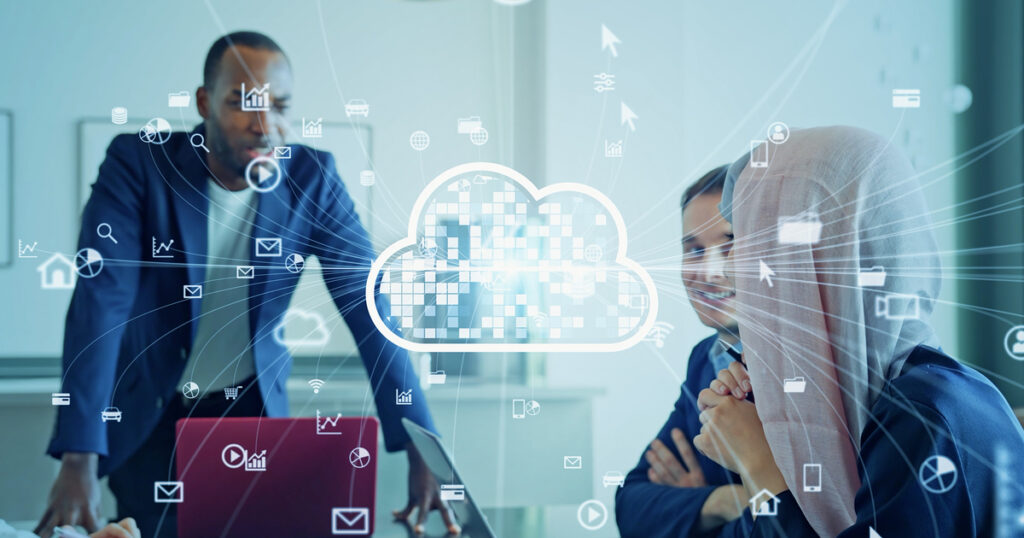
Enterprise cloud software, such as cloud-based ERP systems, provides solutions to many problems that arise with on-premises ERP systems.
Making the switch to the Cloud
Business executives are converting rapidly to the Cloud on a global scale. Switching to a cloud-based system can help your business become more agile and growth-oriented, especially now that virtual offices and remote work are becoming more prevalent.
More companies recognize Cloud ERPs as the new normal. Cloud ERP systems are superior to their on-site counterparts in that they offer scalable, adaptable, and cost-effective technology.
Gains from Cloud Computing
Cloud computing has significantly changed how enterprise leadership views its IT resources. From a technological curiosity, the Cloud has developed into a vital part of modernizing the IT infrastructure and facilitating the digital transformation of big and small enterprises.
Let's look at cloud computing before delving deeper into cloud ERP systems.
Cloud computing and storage platforms offer many benefits over conventional on-premises systems, including lower operational costs and better compatibility with the working style of digital organizations.
Following are a few typical justifications for businesses using cloud computing services:
Lower Cost: Using the Cloud reduces the upfront expenses of hardware and software as well as the costs of building up and maintaining local data centers, which include the costs of server racks, round-the-clock electricity, and cooling, and IT professionals to operate the infrastructure. The cost of using cloud ERP is typically lower.
Greater Flexibility: One advantage of cloud computing services is the capacity to scale flexibly. The Cloud includes providing the proper amount of IT resources – such as adding or decreasing processing power, storage, and bandwidth – at the right time and from the appropriate location.
Improved Performance: The most well-known cloud computing services reside in a worldwide network of safe data centers routinely upgraded with the newest model of quick and effective computing gear. You may quickly get extra computing power if you need it for better performance by purchasing more cloud computing capacity. Consider the many benefits of a single corporate data center, including lower application network latency and more significant economies of scale.
Enhanced Security: Many cloud service providers supply a wide range of rules, technologies, and controls to help you strengthen your overall security posture and protect your infrastructure, apps, and data. Due to their limited financial resources, small businesses can notably benefit from this. Additionally, the company may operate securely without adding more employees for data security.
Greater Productivity: On-site data centers are for racking and stacking, which includes software patching, hardware configuration, and other time-consuming IT management duties. Many tasks are no longer required due to cloud computing, freeing IT staff to concentrate on more critical business objectives. Thus, the efficiency of the internal IT team may be used for other crucial duties, increasing employee productivity.
High Reliability: Cloud computing makes data backup, disaster recovery, and business continuity simpler and less expensive by replicating data to various locations on the cloud provider's network. Your data will be protected even if something goes wrong at one location - the IT team can restore it from another site.
On-premises vs. Cloud ERP
You can purchase mainframe computers and add them to your current infrastructure if you need extra processing power or bandwidth. The benefit is that you have total control over your data and are not required to pay outside vendors. Conversely, a cloud ERP solution allows users to access their ERP software through the internet. The ERP tools and software are distributed and maintained via the Cloud rather than being kept on-site.

10 Reasons Why All Sized Businesses Should Move from On-premises to the Cloud
Because Cloud ERP systems cut the cost of ownership, remove barriers to increased functionality, enhance corporate agility, improve data security, and reduce IT dependency, many businesses, especially small and medium-sized ones, benefit from them.
- Reduce IT spending
One of the most popular justifications for corporations using the Cloud is the ability to save money on IT infrastructure. Businesses can make changes on the fly, eliminate unnecessary assets, and easily right-size cloud-based resources depending on specific demands rather than estimating capacity requirements in advance.
Since no hardware is needed, cloud-based ERP systems are also less expensive to implement than on-premises ERP systems. Since most cloud-based ERP systems are available on a subscription basis and can be rapidly and painlessly adopted, it is a viable solution for small and medium-sized businesses.
- Enhance business agility
In today's global market, business flexibility is essential. Organizations must access flexible, on-demand IT resources to stay abreast of the competition and adapt to rapidly evolving industry dynamics. And more than 99 percent of what they need is on demand in the Cloud. Rather than waiting weeks or months for hardware and installation components, businesses may now lease capabilities straight from cloud providers, enabling them to launch products much more quickly.
- Strengthen Security
According to Statista Research Department, the global cost of cybercrime was estimated at some 8.4 trillion U.S. dollars in 2022. The company estimates that the cost of incidents caused by illegal activities on the internet is set to surpass the 11 trillion U.S. dollar mark in 2023. By 2026, annual cybercrime costs worldwide could exceed 20 trillion, an increase of almost 150 percent compared to 2022.
Undoubtedly, the growing frequency and severity of attacks in recent years have brought cybersecurity into sharper focus. No business can afford to let its guard down in this area since the results could be disastrous.
There is a widespread misconception that having an on-premises ERP provides greater security because it is "in-house." These days, data security is a top concern, and Cloud-based ERP suppliers offer built-in security measures to protect your information. But ignoring the value of cloud services could expose businesses to unnecessary security risks because they would need to rely on aging or poorly managed internal systems with more vulnerabilities than the public cloud equivalent.
Enterprise-grade security and compliance can be offered by cloud-based ERP vendors, much beyond what a firm can offer internally. Businesses can enhance their IT infrastructure and safeguard their programs from hacking attempts by migrating to the Cloud.
- Banish Worries About Hardware End of Life
End-of-life dates for critical hardware and software solutions can impact many choices. Effectively utilizing an on-premises ERP system necessitates extensive planning and calculations. Long-term contracts and restrictive license agreements further complicate the situation. Enterprises want to be free of such worries in the modern era, where startups can become unicorns in a year.
With a cloud ERP, businesses don't have to be concerned about contract terms or application life cycles because they can pay for critical functions and take advantage of upgrades as they become available.
- Boost Productivity
Thanks to a cloud ERP, businesses no longer need to manage their own on-premises data centers. Therefore, switching to a cloud-based ERP might significantly impact a company's IT department. Internal IT employees have little time to create and manage strategic IT architecture since on-premises ERPs require much maintenance. On the other side, operating an ERP from the Cloud typically requires less time and effort. The daily maintenance tasks the IT team must worry about will decrease as the software vendor assumes technical duties.
- Utilize Trouble-free Maintenance
Because the vendor hosts and maintains the system infrastructure, businesses don't have to worry about upgrading or maintaining their ERP software. To keep the program safe and in compliance with all relevant laws and regulations, the vendor maintains the database, servers, and other infrastructure and automatically sends new updates or patches to all clients. These providers take care of issues and frequently offer 24/7 assistance as a subscription-based service.
- Utilize modern technology
Utilizing new cloud-native technologies is made possible by moving to the Cloud in various ways. Cloud ERP offers a quicker and more economical way to apply them since AI, machine learning, complex analytics, and other business intelligence capabilities are built into the service. Without spending much money, these can assist businesses in improving operations, developing game-changing new services, and making more accurate estimates.
- Deploy in Less Time
Deployments in the Cloud are frequently quicker than those done on-premises. A Cloud ERP application of comparable complexity and breadth could take two weeks instead of an on-premises implementation, which may take three months. It reduces downtime when the transfer is finished and enables businesses to react rapidly to shifting market circumstances or meet rising demand. Additionally, it allows the company to concentrate on its core functions and delegate any early ERP-related worries to the cloud vendor.
- Utilize Simpler Customization
Many firms lack IT personnel with a background in creating enterprise resource solutions, making everything more challenging. Configuring an on-premises system to meet specific business objectives is more expensive. It demands a more significant time and resource commitment because the firm must do everything internally. Making the appropriate combination of third-party apps and ERP capabilities, as well as the required software and hardware improvements, are all part of this.
On the other side, because adaptations are carried out by the seller, customizing cloud ERP solutions is a quicker and less expensive process. No new hardware or software expenses exist, and no prior ERP experience is necessary. Companies can quickly and affordably create a solution that meets their unique demands.
- Make Collaboration Easier
One of the key advantages of switching to the Cloud is collaboration over the Cloud. It enables simultaneous collaboration among numerous personnel from various geographical locations.
Version control is a significant advantage of cloud collaboration. Users can collaborate on the same document simultaneously; all modifications are automatically saved and recorded. It results in fewer individual versions, leaving a permanent virtual trail behind.
And the Outcome?
With these benefits, moving ERP to the Cloud enables businesses to provide more value with fewer resources. However, customizing your journey to the Cloud to your company's unique demands, objectives, and technology strategy will make your move smooth. You set the tempo and prioritize the most critical facets of your business.
Choosing a supplier with a track record of managing cloud infrastructure contracts across various sectors and locations is best. A partner with many cloud users and solutions spanning all business activities is ideal in the ERP sector.
Ready to take your legacy, on-premises ERP to the Cloud? We're here to help.
About the author
Liberty Grove Software is an established Microsoft Partner that focuses on providing customers with sales, service, and support for Microsoft Dynamics 365 Business Central/NAV solutions and training and upgrades.
Over the course of more than 25 years, Liberty Grove has assisted hundreds of customers with businesses ranging from small to mid-sized to Microsoft Partners in implementing, training, customization, and upgrading Microsoft Dynamics ERP solutions.
The organization is one of only a few companies worldwide that Microsoft recognizes as qualified to provide Business Central/NAV Upgrade Service Centers.
Related Reading:
Move into 2023 without Your Legacy ERP!
Legacy. It’s an interesting word. Depending on the context surrounding it, legacy can have positive or negative connotations.
On the positive side, we refer to the kind of legacy that is synonymous with a bequest, as in “She left us a legacy of a million dollars.” Or something transmitted by or received from an ancestor or predecessor or from the past, such as the legacy of the ancient philosophers.
On the negative side, legacy can refer to a candidate for membership in an organization (such as a school or fraternal order) who is given special status because of a familial relationship. “Legacies, or children of alumni, are three times more likely to be accepted to Harvard than other high school graduates with the same (sometimes better) scores.
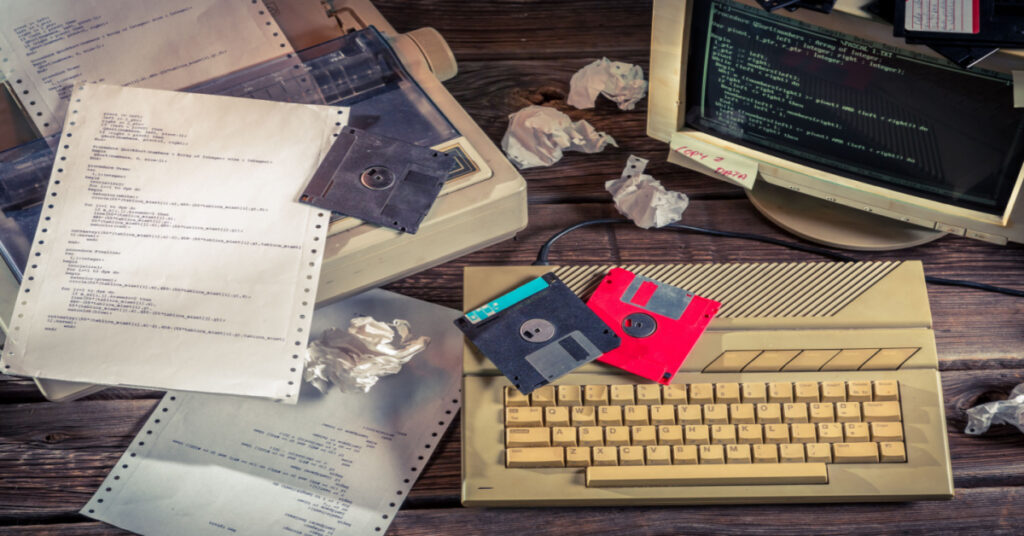
Last but not least, we have legacy technology, meaning any old and outdated technology, such as computer hardware or software. Therein lies legacy ERP, meaning an Enterprise Resource Planning software system that is woefully outdated.
As we are about to bid goodbye to 2022, our advice to you is this:
Don’t Move into 2023 with Your Legacy ERP!
Some of you might be saying, why not? I’ve got a dozen (12) good reasons.
- Legacy ERP software is slower than newer versions.
- Legacy ERP software cannot communicate well (or at all) with newer technologies.
- Legacy ERP software tends to break down frequently.
- Therefore, legacy ERP software costs more to maintain.
- Legacy ERP software is less efficient.
- Legacy ERP software contains less functionality than newer versions.
- Applicants for positions you’re trying to fill will balk at your legacy ERP software.
- Legacy ERP software says something about you and your company.
- Legacy ERP systems tend to provide fewer automations.
- Legacy ERP systems tend not to have built-in Business Intelligence (BI).
- Legacy ERP software will not help you maintain a competitive edge.
- Ultimately, legacy ERP software will not support your company’s growth.
I rest my case!
I would also ask you: How often do you upgrade your cell phone? How often do you upgrade your laptop or your tablet? More often than your ERP software? What’s wrong with that picture?
If you’re from the “Show Me” state, we would be happy to show you just how much your legacy is costing you, not only in dollars and cents but also in working relationships with your clients and business partners, in your ability to attract top-notch employees, in time-consuming inefficiencies.
That’s why we implore you to…
Take the next step…
Contact Liberty Grove Software by calling 630-858-7388 or emailing nav@libertygrove.com.
Related Post
The Top Key Benefits to Migrating Your ERP to the Cloud
Your Microsoft Dynamics ERP system is already doing a lot of heavy lifting for you, making your work more accessible, efficient, and cost-effective.
Those ERP systems, which we rely upon and dearly love, were initially developed to run on desktop computers, workstations, and laptops.
But let's face it.
We now live in a mobile world. Fortunately for all of us, that reality did not go unnoticed at Microsoft. And that's why, here at Liberty Grove Software, we are pleased to introduce you to the mobile apps that Microsoft has developed for users of Dynamics ERP who want the ability to perform various job functions on phones and tablets.
Meet the Microsoft Dynamics ERP Mobile Apps for Phones and Tablets
You now have the ability, for example, to use the Dynamics ERP for phones app or the Dynamics ERP for tablets app to run customer engagement apps that are built on Microsoft Dataverse on your mobile device. That includes Dynamics Sales, Dynamics Customer Service, and Dynamics Marketing.
All you have to do is download the mobile app and sign in to run the same apps you use in a Web browser on your mobile device.
There are also several separate mobile apps, such as:
- Power Apps mobile for running model-driven apps and canvas apps
- Field Service mobile app
- Finance and Operations mobile app
I can only imagine you have many questions about the new mobile apps. Just contact us!

Meet the New Microsoft Dynamics ERP Web Portals
88% of US respondents expect a brand to have a self-service portal.
80% of sales involve partners, making a platform for collaboration with your partners a necessity.
Power Apps Portals address these needs. Portals are Websites that extend the functionality of your existing solutions for sales, marketing, customer service, field service, supply chain management, and Human Resources. They are platforms for collaborating and engaging with customers, partners, employees, or communities.
- There are now portals that can be quickly and easily set up for:
- Customer self-services
- Community forums
- Partner engagement
- Employee self-service
- Vendor collaboration
Starter portals can be launched with minimal effort. A quick start is possible due to to further customizable portal presets. It's important to note that you may also adjust user roles and grant access permissions, thus ensuring data security. Have you got questions? Just contact us!
In conclusion
In one of his iconic songs, Bob Dylan said it best: “The Times They Are A-Changin.”
Microsoft knows that your Dynamic ERP solutions need to change with the times. Mobile apps and Web portals have been developed for your use, the former on phones and tablets. The latter on the World Wide Web. Are you ready to enhance your ERP with these tools and platforms?
Contact Liberty Grove Software by calling 630-858-7388 or emailing nav@libertygrove.com.
Related Post
Get Ready to Extend Your Microsoft Business Central and NAV ERP Investment
Typically, when seeking to improve the bottom line, manufacturers consider increasing income/profits and decreasing costs. They may even think about increasing efficiency.
However, in this day and age, manufacturers can also look at the role of data in every aspect of their operations.
In this article we discuss how manufacturers integrate data from multiple systems and help increase their bottom line.

Data, Data Everywhere, and Not a Drop to Exploit!
To understand how data can increase the bottom line, we can begin by asking a lot of questions:
Where does it come from?
Where is it applied?
How do we use it?
How and where do we store it?
How do we analyze it?
Who analyzes it?
Do we have enough data?
Or, do we have too much?

Where Is Your Data Coming From?
Manufacturing data can emanate from numerous sources, both internal and external.
Internal Data Sources
Every report generated in every department – finance, operations, sales, marketing, HR … - contains current data potentially useful as a window into a manufacturer's ongoing business. Historical data reveals positive and negative trends that can guide present and future business decisions.
And then, a variety of sensors have become ubiquitous in many manufacturing environments. Sensor technology plays an essential role in machine automation. Sensors provide information about products during the manufacturing process. They deliver updates about the condition of the equipment. These sensors guide maintenance and prevent downtime. In other scenarios, sensors provide feedback on the motion of the motor to ensure accurate positioning.
If BI (Business Intelligence), AI (Artificial Intelligence), and ML (Machine Learning) technologies are in use, they will provide a treasure trove of additional data.

External Data Sources
The IoT (Internet of Things) and IIoT (Industrial Internet of Things) are significant external data sources. IIoT devices acquire and analyze data from connected assets, locations, and people. They provide insights that can be used to speed the manufacturing process, predict failures, reduce downtime, and increase automation.
The first step is to get hold of the data. The second step is to use it wisely. This can be accomplished by finding relationships in the data to determine cause and effect and improve efficiency and predictability. The ultimate goal is to bring computing to these data streams to shorten decision times, lower expenses, and, wherever possible, eliminate risk.
Integrate Data from Multiple Systems, Increase the Bottom Line
Think about all the data sources discussed above, just the tip of the iceberg. Individual, standalone data points are of minimal use. When integrated from multiple systems and sources, these data points can yield actionable results.
Think, for example, about triangulation. If you were to try and determine where a particular cell phone call had been made, you could only do so, with any hope of success, via triangulation. Using cell tower triangulation (3 towers), it is possible to determine a phone location within an area of less than a square mile.
Multiple data points, at least 3, are required. A single data point may be an aberration. Two data points provide only a linear conclusion. The third data point provides greater dimensions.
Let's talk about how manufacturers integrate data…
… and how to use it to your advantage, how manufactures integrate data from multiple systems in ways that can increase your bottom line.
Contact Liberty Grove Software by calling 630-858-7388 or emailing nav@libertygrove.com.
Related Post
Learn About Why a Practical Shop Floor Data Collection Solution is Needed
After decades of working with clients in the Food & Beverage Industry, it was only a matter of time before we started working with companies in the animal and plant protein sector, especially as protein drinks, bars, and supplements have surged in popularity.

And as their popularity surged, the newly minted companies manufacturing, distributing, marketing, and selling those products started growing in leaps and bounds. And as they grew, they began to need more extensive and better ERP software systems to run their operations.
Learning about Animal and Plant Protein
The Liberty Grove team was pretty sure that their business software needs would be very similar to those of our other clients in the Food & Beverage Industry. But before making that claim, we needed to understand this subsector: its business models, manufacturing and distribution processes, and markets.
We were excited! It’s not every day that new horizons open up and take off the way animal and plant protein products have.
As part of our learning process, we found ourselves asking some basic questions, such as:
What is driving the growth of the plant-based protein market?
Consumer notions of what constitutes a good protein source are expanding, including a wider variety of plant protein ingredients. Subsequently, interest in plant protein ingredients among food manufacturers and food service operators is intensifying, thereby fueling the growth of the global plant-based protein market.
Is plant-based or animal-based protein healthier?
On average, your body absorbs animal-based protein better than plant-based protein. Soy, however, is the exception and is equivalent to animal sources. Further questioning led us to understand that it doesn’t have to be a question of one or the other. Both sources of protein are healthy.
What is the business case?
Diversifying and rebalancing protein intake, including the amplification of sustainable and healthy plants and other alternative protein sources, have enormous potential to bring about positive health and environmental outcomes. Ensuring the sustainable production of animal proteins can reduce or even capture greenhouse gas emissions, conserve biodiversity and boost soil health and farmer incomes.1
In short, we learned a lot!
The Bottom Line
The bottom line proved to be what we initially expected. The ERP software needs of companies in the plant and/or animal protein sector are no different from those of any other Food & Beverage company that Liberty Grove works with.
DynamicsFoodERP from Liberty Grove allows small to medium Food and beverage manufacturers and distributors to stay ahead of rapidly changing regulations, identify and head off potential supply chain disruptions, and maintain a competitive edge. Powered by Microsoft Dynamics 365 Business Central Cloud ERP’s rock-solid technology, Food & Beverage companies, including those in the plant and/or animal protein subsector, can simplify operations to compete better.
Take the next step
Contact Liberty Grove Software by calling 630-858-7388 or emailing nav@libertygrove.com.
Related Post
Food & Beverage: How to Choose the “Right” ERP Implementation Partner
1 Sustainable Protein - World Business Council for Sustainable Development (WBCSD)
If you are a veteran Microsoft Dynamics user, you probably know about Community Summit. For those of you who are new to Microsoft Dynamics, suffice it to say that the annual Summit conference is the largest independent gathering of Dynamics users in the world!

This year, Summit will be held at the Gaylord Palms Resort & Convention Center from October 10 to 13th in Orlando, Florida. The content will focus on people considering Dynamics, new to Dynamics, migrating to Dynamics, and optimizing their current Dynamics software system.
Liberty Grove Will Be at Community Summit. Will You Join Us?
In fact, we will be presenting three sessions with topics ranging from managing supply chain disruptions to onboarding employees.
Andrew Good, Liberty Grove CEO, will host all three sessions.
Here are the details:
Session 1:
Managing Supply Chain in Disruptive Times with Dynamics 365 Business Central
Date: Tuesday, October 11
Time: 11:00am to 12:00pm
Room: Destin 2 - Convention Center, Level 2
Synopsis: Leverage the tools at your disposal in Business Central to streamline operations, identify, and manage problems. Learn about several tools that you can use to identify supply chain problems early and keep them under control.
Session 2:
How to Onboard New Employees and Ensure Accuracy in NAV/BC
Date: Tuesday, October 11
Time: 2:30 to 3:00pm
Room: Gainesville 1 - Convention Center, Level 2
Synopsis: Let's talk about what has worked for getting new people on board and effective with BC and NAV. This will have an operations focus.
Session 3:
Manufacturing - Managing Costing with Business Central
Date: Thursday, October 13
Time: 11:15am to 12:00pm
Room: Naples 2 - Convention Center, Level 2
Synopsis: Costing is key during the best of times. Let's look at strategies to evaluate the impact of cost changes on your business. We know costs are changing, from materials and utilities to labor. Learn how to create a test company to work in and learn the elements of a good cost testing plan.
About Andrew Good

Andrew Good, our fearless leader, is Liberty Grove's CEO.
He is a Software Engineer, project manager, analyst, manufacturing expert, and Lead NAV Microsoft Certified Trainer. Andrew works on implementations, project management, business process design, application analysis, end-user training, and implementation project management training. Andrew is part of the inaugural group of Dynamics Credentialed Professionals for Core Application Setup in Microsoft Dynamics NAV.
Let's Say You Are Interested in the Topics We're Presenting, but You Cannot Attend
We hope you will join us, but if you're interested in one or more of our presentations but cannot attend, we would be happy to put you in touch with Andrew so you can chat. Just contact Liberty Grove Software. Call 630-858-7388 or email us at nav@libertygrove.com.
Recommended Blog to read:
The Top Key Benefits to Migrating Your ERP to the Cloud

The best way to make sure that we tell it like it is, would be to quote directly from Microsoft's recent Enhancement & Advantage Plans announcement. Although the quote below is verbatim, I have bolded text that I thought was particularly important for our Microsoft Dynamics customers:
"For the first time, Microsoft is adjusting prices of our Customer Services and Support plans.
Effective October 1, 2022, pricing for Dynamics Enhancement Plan (EP) and Dynamics Advantage Plan (AP) will increase by 1% of Protected List Price (PLP)."
"This change will impact the customer's first renewal after October 1.
For example, the list price of the Enhancement Plan will change from 16% to 17% of a customer's PLP.
This change does not impact Advantage Plus or Software Assurance (SA) plans."
Also, I should note that I think it's fantastic that this is the first time Microsoft has ever increased the cost of their Customer Services and Support plans.
But moving right along, although I know you could do the math, I thought it might be helpful if I provided a simple example anyway, a quick computation, using some nice round numbers that will make it ridiculously easy to understand:
A Simple Example
Let's say your total Protected List Price (PLP) is $50,000 and your Enhancement Plan (EP), which provides you with Customer Services and Support, currently costs you 16%. In other words, you're currently paying $8,000 for your Enhancement Plan.
The price increase means that the cost of your Enhancement Plan will increase from 16% of your Protected List Price to 17%. Thus, the next time your renewal comes up after October 1, 2022, your renewal cost will be $8,500. Simple, right?

Which Microsoft Dynamics ERP products will be impacted?
The straightforward answer is: All of them.
To alleviate any misunderstandings, I've listed them below, in alphabetical order.
- Microsoft Dynamics 365 Business Central
- Microsoft Dynamics 365 for Operations
- Microsoft Dynamics AX
- Microsoft Dynamics CRM
- Microsoft Dynamics GP
- Microsoft Dynamics NAV
- Microsoft Dynamics Point of Sale (POS)
- Microsoft Dynamics Retail Management System (RMS)
- Microsoft Dynamics SL
So, let's sum this up:
The effective date of the price increase: October 1, 2022
Price increase amount: 1%
Service and support contracts impacted: Enhancement Plan (EP), Advantage Plan (AP)
Microsoft Dynamics ERP products impacted: All
Price increases are never welcome, and no one ever wants to be the one to break the bad news. I should note that I think it's fantastic that this is the first time Microsoft has increased the cost of their Customer Services and Support plans.
Got Questions?
Please don't hesitate to contact Liberty Grove Software by calling 630-858-7388 or emailing nav@libertygrove.com.
Related Post
5 Signs that You're Choosing the Wrong ERP Partner for Your Implementation
You don’t know us, at yeast not yet. However, we know you!

If your company is a brewery or microbrewery, we know your business processes. We understand your challenges. We know how a modern ERP software system can help your company survive and thrive. We know you because we have clients just like you. We’ve spent decades serving the software needs of breweries and microbreweries, learning the industry, and accumulating industry knowledge. That’s why we can safely say that.
Industry Knowledge Wins the Day for Our Brewery and Microbrewery ERP Clients
We understand the brewing and bottling processes, labeling, and packaging requirements that challenge you daily. We also know that alcohol is a highly and strictly regulated industry. Furthermore, we understand that beer has a relatively short shelf life compared to other alcoholic beverages. And we understand that the recipe for each type of beer you brew requires the highest possible level of exactitude because every bottle or keg needs to be precisely the same.
But most of all, we understand the importance of:
Brewery and Microbrewery Regulatory Compliance
All alcoholic beverages, as mentioned above, are highly and strictly regulated at the federal, state, and local levels. Beer is no exception.
There is a three-tier system with producers at the top, wholesalers in the middle, and retailers at the bottom. The three-tier system ensures product safety, tax collection, and the prevention of market domination by restricting any one tier from having a financial interest in another.
And if that wasn’t already difficult enough, there are also two regulatory systems: The control and the license models.
And if that wasn’t complex enough, there are not one but several federal agencies that oversee alcohol:
- The Alcohol and Tobacco Tax and Trade Bureau (TTB)
- The Federal Trade Commission (FTC)
- The Food and Drug Administration (FDA)
- The Federal Communications Commission (FCC)
- The Bureau of Alcohol, Tobacco, Firearms, and Explosives (BATFE), better known as the ATF
If your company is a brewery or microbrewery, you already know the complexities of regulation and compliance. So why are we telling you? It goes back to what I said at the very beginning of this article.
You don’t know us, at least not yet. However, we know you!
We want to show you how well-versed we are in various aspects of your business. Compliance is not the only issue you deal with every day. There’s also Inventory Management (IM), Warehouse Management Systems (WMS), Supply Chain Management (SCM), and Logistics Management.
In the current environment, where freight and drayage costs are rising many folds, you need all the help you can get to maximize efficiency. You need to find ways to increase productivity, stay on top of compliance, and streamline processes and operations so that every penny you save can go straight to the bottom line. And that help comes from a fully integrated, modern, powerful ERP software system called Microsoft Dynamics 365 Business Central.
Finally.
Who Are We?
We are Liberty Grove Software, a Microsoft partner specializing in ERP solutions and services for companies in the Food & Beverage industries. You can quickly get to know us by reading more about our company and about the Liberty Grove team.
Contact Liberty Grove Software by calling 630-858-7388 or emailing nav@libertygrove.com.
Another blogs posts you may be interested in:
Digital Transformation Benefits in the Food & Beverage Industry: Part 1
Digital Transformation in the Food & Beverage Industry: Part 2
In Part 1 of this 2-part series, we looked at what Digital Transformation (DT) does and doesn't mean. We touched on the strategy and the journey. We explored the goals companies are trying to fulfill by embracing DT and implementing DT company-wide.

If you missed Part 1 of the series, you could still read it here to gain some insights and perspective into the overall value of DT before reading today's blog, which is Part 2. Just click on the title below.
Digital Transformation in the Food & Beverage Industry: Part 1
Here, in Part 2, we will delve into the benefits of Digital Transformation specific to the Food & Beverage industry.
Think about the tasks that are the most mundane and time-consuming, perhaps some of the day-to-day grunt work that involves manual data entry. Think about your supply chain and how the recent supply chain disruptions and freight rate hikes have impacted your food business.
Then think: What if Digital Transformation could mitigate or eliminate those issues? Let's see…
Mundane Time-Consuming Tasks
Obviously, there are many kinds of companies in several sectors under the Food & Beverage label. So, let's take one example: A small company that imports beer, wine, and spirits from multiple sites around the globe, including Eastern Europe, Western Europe, and Asia.
The owner/president, who happens to be a woman, wears many hats, but mainly CFO (Chief Financial Officer) and COO (Chief Operations Officer). What does her day-to-day look like? Of course, she checks her email first thing in the morning. And then…
She starts checking on all her pending orders, bottling, labeling, packaging dates, container movement, expected arrivals, and drayage from the port to her warehouse. These are mundane tasks, some of which can be easily automated. All this has been very time-consuming.
In a company that has fully embraced and implemented Digital Transformation, she would not be sitting there running reports because those reports would have run automatically overnight. As soon as she logged in to her laptop, a list of the new daily reports would have automatically popped up. All she would need to do was select the ones she wanted to read.

Supply Chain Disruptions
Like so many importers, our fictitious importer has been plagued with supply chain nightmares: difficulties getting her container on ships in the ports of origin, port delays here in the United States, unloading delays, drayage to warehouse delays, and more, plus price increases across the board.
It's an absolute nightmare, and she's concerned about the very future of her company as cost increases have dug deeply into her profit margins. Her YOY revenue numbers are heading into the red. And that is not sustainable.
But there is such a thing as Supply Chain Management (SCM) software. And it is often an integral component in a company's Digital Transformation. SCM software won't get the container ships into the port faster. No, those ships will have to wait their turn. But here's what SCM software can do!
Supply Chain Management software is a set of tools or modules used for:
- Executing supply chain transactions
- Managing supplier relationships
- Controlling associated business processes
- Maximizing the efficiency of business activities such as the planning and management of the entire supply chain
- Automating operations
By automating operations and logistics, SCM software increases a business's physical and information flow. The entire business, therefore, benefits from:
- Higher performance
- Greater cost-efficiency, and thus
- Increased supply chain efficiency.
Supply Chain Management (SCM) software typically includes:
- Customer requirement processing
- Purchase order processing
- Sales and distribution
- Inventory management
- Goods receipt
- Warehouse management
- Supplier management
- Supplier sourcing
SCM software may also include forecasting tools that help companies balance the disparity between supply and demand. Such tools use algorithms, consumption analysis, AI (Artificial Intelligence), and BI (Business Intelligence) to improve planning.
WOW!
Are you ready to explore what Digital Transformation can do for you?
We are here to assist you as you plan and strategize your digital journey. Just contact Liberty Grove Software. Call 630-858-7388 or email us at nav@libertygrove.com.
Relate Post
The Top Key Benefits to Migrating Your ERP to the Cloud
Over the last decade, perhaps even longer than that, Digital Transformation has been all the buzz. Companies of all stripes, starting with the Fortune 500 and moving down the food chain, began to develop Digital Transformation strategies. These plans would take them on what was often called a "Digital Transformation Journey."
But wait!
Does every business person on the planet actually understand what those two capitalized words, Digital Transformation, mean beyond the dictionary definitions of those two lower case words, namely "digital" and "transformation?" I seriously doubt it.
When searching for meaning, it's often helpful to start with the dictionary. The Merriam-Webster Dictionary online is my go-to source.
Merriam-Webster provides no fewer than ten definitions (!) for the word "digital." But in its simplest form, digital is basically the opposite of analog. Or, more explicitly, something that is composed of data, especially in the form of binary digits.
Merriam-Webster provided only four definitions of the word "transformation," one of them being: false hair worn especially by a woman to replace or supplement natural hair." Who knew? Obviously, not the definition we're looking for. LOL
In a nutshell, "transformation" means conversion or metamorphosis. So, for our purposes, in the context of technology and computer systems, Digital Transformation would mean the conversion from analog to digital.
But wait!
That would be too narrow a definition. Yes, converting from analog to digital is part of Digital Transformation. But only tiny amounts. So, now it's time to look at the bigger picture, wherein Digital Transformation (sometimes referred to as DT or DX) is an organization's adoption of digital technology. Common goals for its implementation are to improve efficiency, value, or innovation.
That makes sense.

A recent article in Forbes tells us: "The goal of a digital transformation is to use technology to solve traditional problems, which means integrating technology into every area of the business. When done right, digital transformation allows companies to provide unprecedented value to customers." 1

Caution!
In that same article, there is also a cautionary tale. "According to research in Harvard Business Review, of the $1.3 trillion spent on digital transformation in 2018, an estimated $900 billion was wasted when initiatives didn't meet their goals." 1
Planning and Strategy
You do need a plan and a strategy for achieving a major Digital Transformation in your enterprise. It would help if you had a roadmap that takes you from the starting to the finish line of your Digital Transformation journey. It's not a day trip. Nor is it a sprint. It's a marathon, a long and winding road with mileposts that translate into goal posts.
You cannot move into the 21st century dragging legacy business management software (ERP) behind you like a ball and chain. You need to free yourself and your company from those constraints, or should we call them restraints.
There is no one size fits all Digital Transformation roadmap because every business is unique. Companies operating in the Food & Beverage sector, the sector Liberty Grove Software specializes in, understand this better than most. That's why we're asking you to stay tuned for…
Digital Transformation in the Food & Beverage Industry: Part 2
Part 2 is coming your way later this month with a deep dive into what your roadmap might look like and how you can use Digital Transformation to thrive as a company in the Food & Beverage industry.
Meanwhile, you can take the step…
We are here to assist you as you plan and strategize your digital journey. Just contact Liberty Grove Software. Call 630-858-7388 or email us at nav@libertygrove.com.
Relate Post
The Top Key Benefits to Migrating Your ERP to the Cloud