You know the adage "time is money." It's true. Every process within your business requires employee time to execute, and some cumbersome manual tasks consume a great deal of company resources. And simply put, that means saving time makes good business sense.
It's why Business Process Automation (BPA) is one of the hottest concepts in business today.

You can automate operations using the cloud-based service Power Automate, which automates repetitive PC chores and helps streamline your business. One of Power Automate's distinctive features is its ability to handle itself and other Microsoft Power Platform components.
Power Automate allows you to construct three types of workflows: Button Workflows, Scheduled Workflows, and Automated Workflows triggered by clicking a button or when a particular event occurs. You can automate a wide range of operations, including intricate business procedures for data collection.
Microsoft Power Automate is a great place to start if you don't know how to program but want to benefit from cloud automation.
Business Process Automation (BPA) Defined
Team members need help to reduce error margins and delays and enhance inefficient systems when your organization processes enormous volumes of data and completes numerous activities daily. You can create, manage, and improve workflows and elevate organizational effectiveness and productivity with the help of business process automation.
Business Process Automation automates routine and repetitive business operations often performed manually. With BPA, you can rapidly and effectively execute repetitious labor and transition to paperless operations, ranging from complex workflows to straightforward consumer responses.
It entails automating tasks in product development, sales, human resources, and other areas with vast amounts of raw data and documentation. By adding business process management software (BPMS), you can easily manage new workflows that business process automation produces.
Top 6 advantages of using a Business Process Automation (BPA) solution
You can benefit from what BPA software offers after you know which procedures can and cannot be automated and how to create dynamic business process flows for your team.
The following are the top 6 advantages that your company can gain from automating your business processes:
Increased production and efficiency
Your company becomes immediately more efficient and has fewer errors when implementing a new automation solution that removes the potential for errors.
You can eliminate bottleneck jobs and speed up more high-level business processes between business units, team members, and everyone else in your organization by eliminating the daily cumbersome and painful manual processes your team performs.
Reduced costs and time
Automation benefits your company's bottom line, especially for teams that handle their duties through traditional paper-based procedures. Since automating processes speed up internal operations, it's simple to save time and money on the resources required to complete such processes.
Additionally, you can reassign staff previously working on manual tasks to more crucial tasks.
Simple document and data handling
Employees who use manual methods may misplace printed or sent emails, written correspondence, spreadsheets, and other materials. Additionally, transferring data or doing calculations from one data source to another adds time and increases the possibility of human mistakes.
With process automation, all your data and documents are kept in one place, streamlining document management and making organizing and retrieving them easier.
Transparency and openness
Since automation solutions help guarantee that staff follows best practices and governance enforcement, you won't need to give your team extra support.
Thanks to data collection, reporting, and analytics capabilities, you can access data dashboards that provide insight and transparency into workflows across the organization, enabling better-informed decisions.
Process compliance and standardization
Your team members might not always abide by the rigorous rules of automation processes on who can update or make changes to documents. No problem. You don't have to worry about missing steps when BPA is in place because the system includes the procedure. You can create productive automation of your digital workflow to ensure the appropriate information goes to the right person at the proper time.
That means organizations can easily log names, dates, and assignment information and track who uses respective data sets. You can construct audit trails and show compliance by documenting such information.
Increased customer and employee happiness
Employees will be much happier on your team if you add an automated solution to your process because it will make it easier for them to execute many of their daily tasks without making mistakes. Employees can flourish in a frictionless atmosphere created by automation. Quickly completed manager permissions mean your staff can concentrate on projects crucial to driving innovation in business choices.
Why use Business Process Automation (BPA) flows?
People can follow the flow of a business process to complete their tasks, which offers a streamlined user experience that guides users through the procedures established by their company for encounters that require resolution. You can customize the user experience so that users in various security roles have an encounter most appropriate for their work.
With business process flows, companies can create instructions for employees to follow to achieve desired results. Thanks to these steps' visual indicators, people can see where they are in the business process. Plus, business process flows lessen the requirement for training because new users don't need to concentrate on which table to use. They can follow the process as a guide.
Business process flows can be set up to complement popular sales approaches, which will assist your sales teams in producing more significant outcomes. Business process flows for service organizations can speed up the onboarding of new workers and help them prevent errors that might leave clients dissatisfied.
Ultimately, with Business Process Automation, you'll benefit from pleased clients. And happy clients mean repeat business – and greater profits.
Ready to discover how Business Process Automation (BPA)can improve your efficiency?
Liberty Grove can help you analyze and evaluate your practices to determine which processes can be automated to improve efficiency and productivity throughout your organization.
Contact Liberty Grove for a complimentary consultation on how Business Process Automation can increase your employees' productivity and elevate your organization.
About the author
Liberty Grove Software is an established Microsoft Partner that focuses on providing customers with sales, service, and support for Microsoft Dynamics 365 Business Central/NAV solutions and training and upgrades.
Over more than 25 years, Liberty Grove has assisted hundreds of customers with businesses ranging from small to mid-sized to Microsoft Partners in implementing, training, customization, and upgrading Microsoft Dynamics ERP solutions.
The organization is one of only a few companies worldwide that Microsoft recognizes as qualified to provide Business Central/NAV Upgrade Service Centers.
The most thorough training and education event on Microsoft business applications for finance and accounting, IT, operations, and systems administrators is Community Summit 2023, from Dynamics Communities, which will take place in Charlotte, North Carolina, October 15-18, 2023.

And Community Summit 2023 it's a hot ticket. Why?
Community Summit 2023 will feature 500+ sessions on AI, Dynamics, Dynamics 365, Power Platform, and more.
The "for user, by user" event aims to shorten the time it takes to complete the equivalent of months of training. Users can navigate how-to and tutorial sessions that provide practical advice they can bring back and implement at their businesses.
Plus, if purchased before the 5-day event, every attendee's registration fee will be at most $1,849 to access a variety of sessions. Comparatively, a single online training course from a company can cost more than $2,500; your Community Summit 2023 ROI is a no-brainer, say previous participants.
11 compelling reasons to add Community Summit 2023 to this year's budget
- 4,000+ attendees from business administration, IT, accounting, and finance roles across various sectors and businesses of all sizes
- 500+ expert-led education sessions organized by AI, Dynamics & Dynamics 365 ERPs, Power Platform, Data, Business Intelligence, Customer Service, Vertical Industry and more
- Tech-Medic Help Desks, where knowledgeable users work to address your unique difficulties or issues
- General sessions by Microsoft executives providing updates and business and ERP roadmap apps you regularly use
- 200+ partners and independent software vendors (ISVs) on the expo floor to close gaps in implementation, data management, cybersecurity, automation, reporting, and more
- Registration fee covers all meals and receptions
- A welcome celebration with live music, food, beverages, and special events on the expo floor
- NASCAR Hall of Fame reception with notable NASCAR attendees, food, beverages, and engaging racing experiences
- Opportunity to network with peers and exchange ideas and experiences –understanding other companies' difficulties and how they overcame them is valuable information
- More than 30 hands-on academy training sessions that count toward continuing education requirements (additional cost)
- The Preconference AI Summit on October 16 will feature Microsoft executives, AI MVPs, and knowledgeable users (additional cost)
Community Summit 2023 Academy – an education bonus
As an add-on to your event registration (at an additional fee), the Community Summit 2023 Academy program can help you accomplish three key goals:
- Deep dive into a particular Microsoft business application area for intensive training in the "master class" format
- Establish a connection between you and a knowledgeable trainer in the field who will help you understand how to apply the training to your company
- Earn CPE (Continuing Professional Education) credits to meet your continuing education requirements on time
Academy is a fantastic opportunity to employ tailored material and specialized classroom instruction to support learning, development, and growth for Dynamics users.
Community Summit 2023 – a fountain of knowledge
There are numerous reasons why you might consider Community Summit 2023. Knowledge is a precious asset, so it's an excellent opportunity to learn something new.
Conference attendees can absorb information in a manner that reading an article or participating in a conference call can't match, whether that knowledge happens to be the newest games or a tutorial on the future of cloud computing.
And while there's something for everyone in the learning opportunities, you won't want to miss the chance to meet and collaborate with like-minded peers to share business experiences and solutions.
Haven't registered yet? Secure your ticket.
Are you concerned about push-back from your manager? This will help justify your trip!
Learning sessions with Liberty Grove's Andrew Good
Liberty Grove CEO Andrew Good will be featured as a panelist, co-presenter, and independent speaker in several sessions.
Andrew built his 22 years of Microsoft Dynamics 365 BC/NAV experience on personal experiences with various companies. His project experiences range from finance to manufacturing (automotive, food and beverage, and aerospace). The central themes of knowing costs and revenues are pervasive and have empowered clients to make good decisions about their operations.
Throughout his career, Andrew has helped customers get the most out of their BC/NAV systems through integrations, upgrades, and extensions that allow them to deal with their changing business environments. His expertise includes leveraging the available tools to deliver end-to-end solutions.
Andrew also speaks at many industry events.
You can learn more about the learning sessions with Andrew below:
Ask the Experts: Manufacturing
Tuesday, October 17 • 9:30 AM - 11:00 AM EST
Manufacturing is indeed a topic for the experts. Attend this session with queries or difficulties you may be experiencing with manufacturing. An expert panel will share advice and assist in this open discussion.
Panelists: Cliff McDaniel (Moderator), Ben Baxter, Steven Chinsky, Andrew Good, Dave Wiser
Manufacturing in Business Central for Newbies
Tuesday, October 17 • 2:45 PM - 4:00 PM EST
This session is appropriate for you if you are new to manufacturing or the Business Central production module. It will focus on a review of the fundamentals of setting up items, Bills of Materials (BOMs), routings, dealing with Production Orders, and posting inputs and outputs. You'll receive advice on how to avoid manufacturing errors, particularly as some of them are difficult to fix. We'll construct a fictitious potato chip factory to help with comprehension.
Presenters: Andrew Good, Steven Chinsky
Wednesday, October 18 • 2:30 PM - 4:00 PM EST
Bring your supply chain problems and use the influence of your peers to gain new insights. You will have the chance to share your expertise and knowledge with others. In this roundtable discussion, you can benefit from one another's experiences and discuss what has and hasn't worked for you.
Speaker: Andrew Good
Ask the Experts: Inventory, Warehouse & Supply Chain
Thursday, October 19 • 2:30 PM - 4:00 PM EST
Amidst the ongoing geopolitical, economic, epidemic, and weather-related problems, supply chains remain a significant concern.
In this interactive discussion, a panel of supply chain professionals will explore how they are sustaining business operations, meeting urgent demands, and minimizing supplier problems during this disruptive time.
To provide first-hand insight into current strategies, best practices, and forward-looking approaches to navigating the current environment and the inevitable storms ahead, we'll draw on various experiences across the supply chain, from inventory management to shipping, receiving, EDI, and warehousing.
Panelists: Kate Pinyan (Moderator), Steven Chinsky, Andrew Good, Chris Howes, Bryan Whitney
If you attend any of Andrew's sessions, please seek him out and say, "Hello!" Got questions about your business for Andrew? Contact us to schedule your personal 1:1 session where you can ask Andrew about what's on your mind.
About the author
Liberty Grove Software is an established Microsoft Partner that focuses on providing customers with sales, service, and support for Microsoft Dynamics 365 Business Central/NAV solutions and training and upgrades.
Over more than 25 years, Liberty Grove has assisted hundreds of customers with businesses ranging from small to mid-sized to Microsoft Partners in implementing, training, customization, and upgrading Microsoft Dynamics ERP solutions.
The organization is one of only a few companies worldwide that Microsoft recognizes as qualified to provide Business Central/NAV Upgrade Service Centers.
For Food and Beverage manufacturers across the globe, there's no doubt that organizational productivity helps drive profits. But when it comes to employee productivity, it can also mean a lot more. And that's where a Food and Beverage ERP can be your partner in profitability.

When discussing the advantages of deploying a Food and Beverage ERP, consider the direct connection between an ERP system and the employee experience. If you own a manufacturing business, you know there's a crucial link between your enterprise's profitability and employee satisfaction.
Consider the impact on your employees
In an ideal scenario, the executive team will develop a plan to provide all employees with a standardized, frictionless experience regardless of position or location. Instead of limiting employees, a contemporary, cloud-based ERP solution can give them an experience that empowers them. Here's how a food ERP solution can help:
- Using automation to cut back on or eliminate tedious manual operations
- Cross-functional operations are made less complicated by offering an integrated data core and a seamless view of pertinent data across the organization
- Delivering tailored omnichannel interfaces and consistent log-ins across hybrid work modes
- Data on employee sentiment can be collected and analyzed to assist HR teams in improving the entire employee experience
Your workforce is behind your success. Great labor begins with great people and determines the caliber of your food and beverage products and services.
When your team experiences job success, they are more likely to be driven to accomplish tasks well, demonstrating greater loyalty to your organization.
4 ways ERP increases employee engagement
While an ERP system like DynamicsFoodERP from Liberty Grove can efficiently run your business, it will also provide your employees greater flexibility.
Here are 4 ways a Food and Beverage ERP can deliver ROI by increasing engagement and giving your employees more power:
#1 - Time is money
Productivity suffers when employees spend most of their workdays manually entering data into Excel sheets or performing other tedious, error-prone manual chores.
With an ERP, the system automates routine, frequently mundane processes. Employees merely need to input updated or new data into the system, which is shared and available throughout the firm. By automating unnecessary operations, your personnel will have more time to work on other urgent, time-sensitive projects.
#2 - Collaboration from the outset
Company owners, managers, or C-level executives are responsible for most corporate decisions. However, it can be difficult to gain employee buy-in when educated estimates and gut instincts drive choices without employee input. When an employee or system user is actively involved, an ERP solution removes the guesswork from the equation for crucial business decisions.
Your employees understand their roles best and can quickly identify repetitive and mundane processes that an ERP solution can eliminate – freeing up their time for more critical and rewarding tasks.
#3 - Going the extra mile
Beyond the value of teamwork, departmental collaboration is crucial to your company's success. With the help of automated processes, an ERP system can consolidate information, make your data accessible, and ensure it's constantly up to date, allowing departments and individual employees to collaborate effectively.
When employees at each level of the organization have access to real-time, accurate data, they can make good decisions with confidence in a positive outcome.
#4 - Remote possibilities
While many workers have returned to the office, others continue to work from home or in a mixed environment. An ERP, especially a cloud-based solution, provides complete system functionality from a desktop, laptop, or mobile device and can be accessed anytime from anywhere.
That allows remote back-office personnel to be independent while remaining an essential part of your company.
Tips for laying the proper foundation within your organization
Choose the best system to fit your company's needs if your corporation is prepared to implement a Food and Beverage ERP solution. First, determine your aims and objectives and choose a reputable internal team for the implementation. Then, specify your functional software requirements, budget and resources, and the system deployment procedure with an ERP partner like Liberty Grove Software.
Look for a few essential aspects when vetting potential ERP vendors, such as an "open" ERP that enables platform scalability and freedom to develop as your organization grows and one that supports mobile users.
Also, pick a supplier with a track record that client endorsements or testimonials can verify, ideally in the Food and Beverage sector. You want your staff to operate independently on an intuitive, simple-to-learn, easy-to-use system.
Nevertheless, implementing an ERP is a complex and complicated procedure. Determining which processes to integrate is the most frequent problem. Your ERP implementation partner will conduct a thorough needs analysis before installation to identify the operational procedures your system must support.
Employee aversion to change and lack of knowledge or proficiency with essential system functions represent a potential barrier. The right ERP partner can provide user training backed by SOPs, embedded help tools, training films, and other learning resources, all supported by thorough and helpful customer service.
It is critical to give your staff the necessary equipment and resources to perform their duties effectively. Remember: your personnel will always be your biggest asset when using an ERP for all facets of your manufacturing business processes.
The more time you can free up for your employees to work on meaningful projects by automating and optimizing tedious tasks, the more time they can spend on skills development and generating novel, original ideas to advance the company.
Summary
A cloud-native Food and Beverage ERP foundation supported by a robust and business-optimized developer environment offers the operational resilience and scalability that today's digital organization demands in an environment marked by continual change and interruptions.
All organizational stakeholders, including staff members, clients, and supply chain partners, will be supported and enabled by a platform built for rapid adaptability through configuration rather than code.
With everyone working from the same data set, productivity and performance increase – and you can watch your profits soar.
Want to increase your employee engagement and give them more power? You and your Food and Beverage ERP solution are where it all begins.
Time to increase employee productivity and profits?
Liberty Grove can help you use many tools and services to help you achieve a successful Food and Beverage ERP implementation that will improve efficiency and productivity throughout your organization.
Contact Liberty Grove for a complimentary consultation on how DynamicsFoodERP can give you the data insights you need to improve decision-making, increase productivity, and compete at a higher level.
Related reading:
Critical Success Factors for the Food Manufacturers (libertygrove.com)
Best 10 Reasons to Move Your On-Premises ERP to the Cloud - Liberty Grove Software
About the author
Liberty Grove Software is an established Microsoft Partner that focuses on providing customers with sales, service, and support for Microsoft Dynamics 365 Business Central/NAV solutions and training and upgrades.
Over more than 25 years, Liberty Grove has assisted hundreds of customers with businesses ranging from small to mid-sized to Microsoft Partners in implementing, training, customization, and upgrading Microsoft Dynamics ERP solutions.
The organization is one of only a few companies worldwide that Microsoft recognizes as qualified to provide Business Central/NAV Upgrade Service Centers.
Have you ever wished you had a crystal ball to help you gain critical data insights for your business? That crystal ball is here – in the form of Power BI. And, unlike most things that sound too good to be true, this powerful tool is the real deal.

But here's the best part: your team doesn't need to be technical geniuses to master it!
Power BI is a business analytics solution that, in the words of Microsoft, "lets you visualize your data, share insights across your organization, or embed them in your app or website."
It's a powerful combination of business intelligence (BI), reporting, and data visualization tools and services that can increase the effectiveness of people and teams.
In addition to connecting with other Microsoft products and services, Power BI sets itself apart with streamlined publication and distribution tools. But is it the best choice for your business?
How does Power BI help companies with data insights?
Every industry's market (and each organization within it) is distinct, with unique issues and challenges. As a result, companies use a variety of selling and marketing strategies to offer a range of services and goods.
Systems in every industry produce a range of data in sizes ranging from terabytes to exabytes. Business intelligence (BI) is how organizations evaluate this data and deliver information that informs decisions. These business intelligence-based decisions are essential to the company's performance.
BI is a rapidly expanding technology that now permeates every industry worldwide. The success of BI services in providing clients with a personalized experience is very high. Businesses are utilizing the potential of this technology by using a large variety of BI Services. Power BI is one such tool that facilitates making complex business decisions.
Why use Power BI?
Microsoft's cloud-based business intelligence service, Power BI, is a product of the company's extensive experience with relational databases, including Access, SQL Server, and others. An effective business intelligence platform enables organizations to thoroughly clean data before turning it into useful information. It extensively examines data and imparts insightful knowledge.
The Gartner Magic Quadrant for Analytics and Business Intelligence Platforms places Microsoft in the leaders' quadrant, making it the dominant vendor in the market. Gartner considers Power BI a go-to platform based on its vision of completeness and capacity to implement BI solutions.
Here are the top 6 reasons why Power BI is best-in-class:
1. Usability
Power BI's interface is straightforward and user-friendly. Utilizing Power BI doesn't require any programming knowledge. It features built-in intelligence that guides your choice of attributes for your reports by recommending the most appropriate reporting component.
Example: When you choose sales and category after selecting the appropriate data source, it will automatically determine the proper column chart for you. Similarly, if you choose sales and location, the map chart will be recognized automatically.
It connects to the data source via a simple user interface (UI). When choosing a data source, you can select attributes for your reports by dragging and dropping them.
QA is one feature where you can type a question, and Power BI will respond with a value or graph depending on the inquiry, among other capabilities. For instance, asking, "What was this year's revenue by month" will provide a diagram showing your revenue broken down by month.
2. Simple to Learn
Power BI is built on the foundation of Excel and creates reports similarly. It makes it easy to learn because Microsoft Excel is a commonly used and widely accepted piece of software.
The principles of Microsoft SQL Server and the Microsoft Access database are the sole foundation for data modeling. As a result, Power BI's data modeling is straightforward for consumers and programmers to embrace.
The Power BI website provides many learning resources to help you understand its impact and flexibility.
3. Easy to Work With
Power BI offers tools that make it simple to collaborate. Users can work with colleagues in "app" workspaces to produce interactive reports and dashboards. Users can combine dashboards and reports with apps that the user can share with a broader audience. When you have a small audience, Power BI makes sharing dashboards or reports a breeze using the mobile app.
The report can be exported as a PowerPoint Presentation and printed by the user. They can even post reports and dashboards on open websites for viewing and interaction by anybody worldwide.
4. Value for Money
The user can create simple and complex reports and dashboards using the free Power BI desktop. Power BI's pro licenses are reasonably priced (USD 10 per month). Power BI includes a premium version that enables you to tailor costing based on your audience usage if you have a larger audience.
5. Broad Data Source Coverage
Microsoft Excel, SQL Server, MySQL, Oracle, IBM DB2, IBM Netezza, IBM Informix, PostgreSQL, Sybase, SAP Hana, Amazon Redshift, Azure SQL Database, Azure SQL Data Warehouse, Azure Analysis Services database, Azure Blob Storage, MailChimp, Facebook, GitHub, Salesforce, and many other data sources are just a few of the data sources for which Power BI has connectors.
6. Effective Visualization
Thanks to Microsoft, the Power BI visualization is SDK (software development kit) available, along with a sizable library for unique visualization. This feature allows users to modify the UI to suit their needs.
A tool called Query Editor, which is incredibly powerful and flexible and has a ton of functionality, is provided by Data Shaping Power BI. The fact that it is self-documenting is the most significant feature. It also allows you to learn more about the DAX language.
Data Modeling
Any well-developed BI solution is robust. Based on knowledge of the SQL database and Cube technology, Power BI offers a variety of highly effective data modeling solutions.
Power BI's rivals who provide comparable functionality include several others, including ZOHO Reports, IBM Watson Analytics, Sisense, and Google Analytics, to mention a few. However, the ease of use and quick response time of Microsoft Help made Power BI stand out in the industry.
Conclusion
Power BI and other business intelligence tools give you the tools you need for better strategic analysis of how to consolidate your data streams, improve accessibility, and gain more intelligent insights. They also enable you to analyze your data and keep your business operating efficiently.
It's simple to understand why Power BI is popular among businesses seeking better insights, dynamic dashboards, and robust reporting.
Time to consider Power BI?
Liberty Grove Software can help you use many tools and services to help you achieve a successful Power BI implementation that will enhance data insights throughout your organization.
Contact Liberty Grove Software for a complimentary consultation on how Power BI can give you the data insights you need to improve decision-making and compete at a higher level.
Related reading:
Everything You Need to Know about the Gifts of Microsoft Power BI - Liberty Grove Software
Liberty Grove Software is an established Microsoft Partner that focuses on providing customers with sales, service, and support for Microsoft Dynamics 365 Business Central/NAV solutions and training and upgrades.
Over more than 25 years, Liberty Grove has assisted hundreds of customers with businesses ranging from small to mid-sized to Microsoft Partners in implementing, training, customization, and upgrading Microsoft Dynamics ERP solutions.
The organization is one of only a few companies worldwide that Microsoft recognizes as qualified to provide Business Central/NAV Upgrade Service Centers.
When it comes to food and beverage production, quality is king. No food and beverage executive wants the call that says their company's product is under recall. Or worse, that consumers have suffered injurious harm or death because of foodborne illness. That's why food quality is top-of-mind every day for manufacturers.
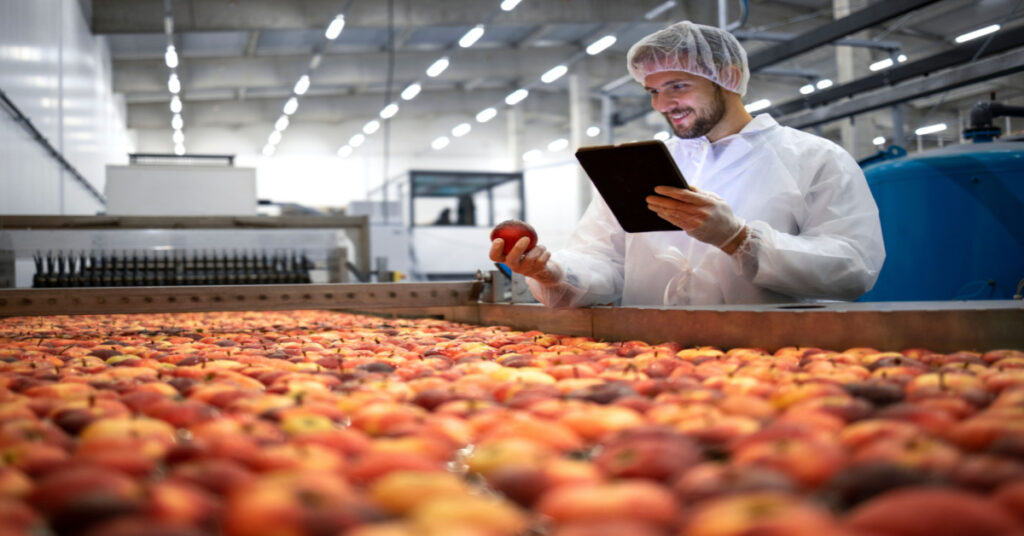
Of course, consumers want to feel confident that the goods they purchase are worth their money. They also want to know that the food they put on the table to feed their families is safe. The only way to ensure their satisfaction is to ensure every product leaving your facility and traveling downstream meets the same high standards you have established.
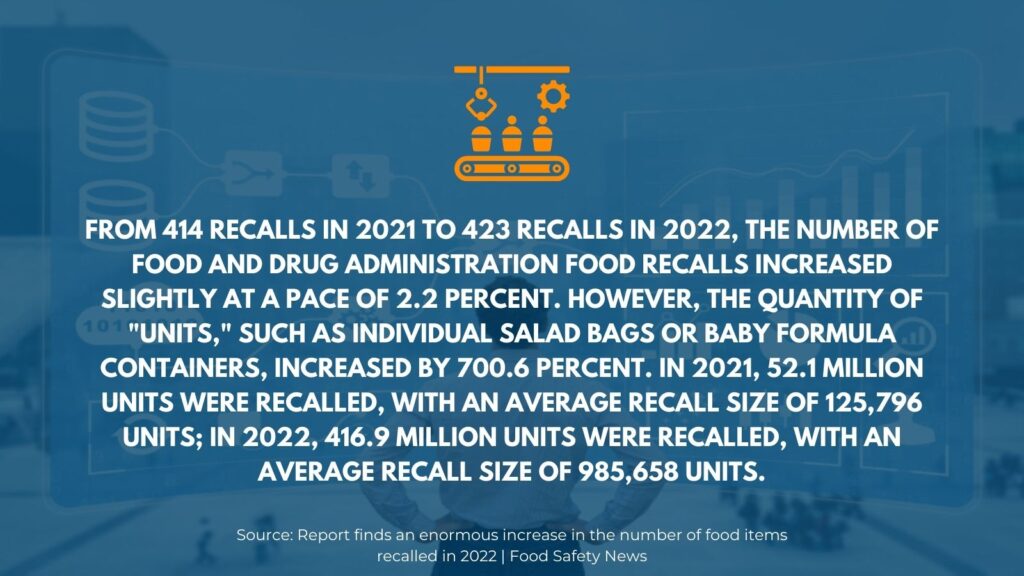
Better brand recognition and increased profitability are benefits of maintaining continual excellence in quality. After all, it makes sense that consumers will favor your product over others if you can produce a better product than your competitors. However, there are considerable dangers associated with failing to put proper food quality control systems in place, including the potential loss of market share or an emergency involving food safety.
The food and beverage business has several essential quality procedures, and to properly master them all, you'll need technology specifically designed for the job, like an enterprise resource planning (ERP) solution.
So, how can the DynamicsFoodERP system save your bacon?
Let's look at seven strategies for handling food quality control issues and how Liberty Grove Software’s DynamicsFoodERP system can help.
1. Create a list of your authorized suppliers
Your company probably has a few reliable, regular material suppliers, but organizing your approved suppliers by ingredient helps to ensure that you have the best raw materials before the manufacturing process starts. This list should contain the precise name of each ingredient, your internal code or identification, and the contact information for any linked suppliers.
ERP platforms may assist you in collecting all of this data, along with the supplier contracts you sign, and maintaining it digitally in a readily accessible company-wide database. By doing so, you can ensure that everyone knows exactly where your ingredients originate and that you are always making purchases from vendors that have received your approval.
2. Requirements for specific ingredients
The expression "your products are only as good as what you put in them" has become somewhat of a cliché, yet it is true. Depending on the component type, you may need to specify what is acceptable regarding sourcing, shelf life, composition, packaging, country of origin, and purity. It would help if you also made this evident to your suppliers.
By digitally recording this information and making it widely accessible to all parties, food ERP solutions help on this front. Once the items are received and evaluated, your staff will have a clear set of standards to compare their findings against, allowing them to decide if everything is up to par or if a return to the supplier for replacement is required.
3. Carefully manage recipes and formulas
Your product development teams spent much time and effort perfecting the recipes for your food and beverage offerings. When customers choose to repurchase their favorite products, they expect consistency. That makes developing precise formulas and adhering to them essential for your firm.
Nearly all industry-specific ERP platforms for the food industry will include some recipe management features. Still, cutting-edge systems like ERP go one step further by interacting with intelligent manufacturing equipment and importing data from it in real-time. That lets your employees immediately step in and fix any problems if a single item or manufacturing run deviates from the norm.
4. Comply with all applicable laws and good manufacturing practices
The U.S. Food and Drug Administration created Current Good Manufacturing Practices (cGMP) for food and beverage businesses to maximize outcomes and reduce risks in manufacturing, processing, and packaging food and beverage goods. The regulations, which are still a reliable foundation for safe and efficient operations, were included in the Federal Food, Drug, and Cosmetic Act.
It may be beneficial to obtain additional certifications, such as those from the International Organization of Standardization (ISO 22000), the British Retail Consortium Global Standards (BRCGS), the Safe Quality Food Institute (SQFI), the Hazard Analysis and Critical Control Points (HACCP) methodology, and the Foundation Food Safety System Certification 22000 (FSSC 22000). Additionally, you have a legal obligation as an organization to abide by all relevant food safety and compliance requirements, such as those established in the U.S. Food Safety Modernization Act (FSMA), depending on the location of your facilities and in which nations you sell your products.
Food and Beverage ERP solutions assist in enforcing requirements by automatically scheduling checks of your processes and compliance procedures. You can develop a culture of food safety and best practices that will go a long way toward preserving the quality of your products by routinely reviewing your operations, tools, and employee behaviors.
5. Gather and track real-time data on food quality
Ensuring your results meet your expectations requires careful production process monitoring while your lines are operating. Without close attention to what is happening and how your machinery works, you risk wasting materials by using them in products of poor quality. When you need to trash your product, you lose money and harm your enterprise's viability.
However, not all ERP systems are made equal in this regard. ERP systems designed for the food and beverage industry, like DynamicsFoodERP, often include quality management capabilities, making collecting and analyzing in-process quality data easier. The ability of Food & Beverage ERP to integrate with intelligent sensors, scales, and thermometers enables the collection of essential data, including cooking temperature and consistency, as well as color, shape, and other vital aspects. It immediately updates your interface to identify and correct issues proactively.
6. Ascertain appropriate packaging and labeling
Although not directly related to the quality of your products, how finished goods are packaged and labeled can significantly influence how customers feel about them. You must make sure that the secondary packaging (any material that bundles multiple products together) fits the shape and durability of the items inside, all necessary labels are correctly applied, and the primary packaging – i.e., that which comes into direct contact with the product – is appropriate to the type of food or beverage it contains.
Strong packaging and labeling management tools are crucial to food and beverage ERP solutions because of these factors. With the help of these tools, you'll be able to rapidly print the appropriate labels with all the information they need, including nutritional facts, ingredient lists, and allergen declarations, and configure the requirements according to the type of product.
7. Prepare a comprehensive recall plan
As important as taking proactive measures to ensure that products satisfy quality standards, it's equally important to have a plan in place in case something goes wrong and a product withdrawal or recall is required. Regarding food safety situations, there is nothing worse than hustling because time is of the essence. It's especially true given the increased attention that the industry is receiving from both regulatory agencies and consumers.
With extensive traceability features, industry-built ERP systems can assist you in locating faults and tracing the origin of contamination back up the supply chain. Still, they can also automate several steps in the recall procedure, such as sending notifications to affected parties. These technologies give businesses visibility, so you won't have to wonder where the problematic material came from or which items the production team used.
Uncompromising Food Quality: The Right Technology is Required
This list makes it abundantly evident that a production team cannot achieve food quality control by performing a single pass or a cursory examination of several characteristics as products leave the production line. From the moment ingredients enter your facilities until the finished goods leave for their final destinations, it is a complicated process that requires action.
It should also be clear how the correct technology solution can help your company achieve everything necessary. You can free your team from the strain of manual recording processes and eliminate the potential for human error because food ERP solutions can automate quality checks and ensure correct performance every time.
There are many ways in which DynamicsFoodERP, our sector-specific food and beverage solution, excels in quality assurance. There are also many more excellent reasons to choose us for your enterprise software requirements. At Liberty Grove Software, our employees have years of experience in the food and beverage sector.
Because all our solutions are Microsoft Dynamics 365-based, our team has access to all the benefits of the most recent advancements and improvements.
Conclusion
Liberty Grove Software can help companies solidify their market position by ensuring food quality through our DynamicsFoodERP, ensuring food quality and the safety of their products. Because when it comes to food quality, subpar simply isn't good enough.
Contact Liberty Grove Software for a complimentary consultation on implementing the right ERP system to protect your customers, your organization – and your reputation.
Related reading:
Critical Success Factors for the Food Manufacturers (libertygrove.com)
About the author
Liberty Grove Software is an established Microsoft Partner that focuses on providing customers with sales, service, and support for Microsoft Dynamics 365 Business Central/NAV solutions and training and upgrades.
Over more than 25 years, Liberty Grove has assisted hundreds of customers with businesses ranging from small to mid-sized to Microsoft Partners in implementing, training, customization, and upgrading Microsoft Dynamics ERP solutions.
The organization is one of only a few companies worldwide that Microsoft recognizes as qualified to provide Business Central/NAV Upgrade Service Centers.
You already know how powerful Microsoft Business Central can be for optimizing your business processes. So, are you interested in how AI can be used within Business Central to take your business to new heights? Let us introduce your new business partner: Dynamics Copilot.

This blog will explore Microsoft Dynamics Copilot and highlight how businesses can use it for increased flexibility and efficiency.
A little history
- The concept of using computer power emerged in the 1940s-1950s (think about how computers were used to decode messages during WWII)
- 1960s – the first use of Materials Requirements Planning (MRP) – helping people to use computing power to assess inventory levels
- 1980s – Oliver Wight introduced MRP II to enrich supply chain planning processes
- 1990s – Enterprise Resource Planning (ERP) systems emerged
- 2010s – Mobile computing integrated into ERP and the addition of Public Cloud – Microsoft began investing in technology infrastructure and laid the foundation for the technical functionality we all enjoy today
- At its inception in 1984, Business Central had a different name and was a single-user entity
- Re-branded to Business Central, it was officially launched in 2018 – look how far it's come!
How can you use Microsoft Dynamics 365 Business Central Copilot?
Microsoft Dynamics 365 Business Central is rapidly using AI, or artificial intelligence, in a number of its features to improve it and give users wise insights. The following are some significant applications of Copilot in Business Central:
- Development of Marketing Text: imagine the time savings when you can produce concise information that will explain your products' features and benefits to prospective customers
- Cash Flow Projections: knowing when a customer will pay based on their payment terms gives you insight into monies you can expect to leverage when needed.
- Late Payment Predictions: even though they're not ideal, knowing when payments might be delayed is vital to business planning.
- Data Analysis and Reporting: Business Central analyzes a lot of data using AI algorithms. Businesses can make wise judgments based on precise insights thanks to their assistance in identifying patterns, trends, and anomalies.
- Intelligent Forecasts: Predictive analytics driven by AI can evaluate historical data and forecast future events. AI algorithms in Business Central can estimate sales, inventory levels, cash flows, and other critical performance metrics, assisting in improved resource allocation and planning.
- Process Automation: AI can automate tedious and repetitive operations, giving people more time to concentrate on strategic duties. For instance, Business Central can employ AI to automate expenditure management, invoice processing, and other typical administrative processes, saving time and increasing productivity.
- Customer relationship management (CRM): Business Central uses AI to improve CRM features. It can evaluate customer data, interactions, and purchase history to make personalized recommendations, improve marketing campaigns, and increase customer happiness and retention.
- Natural Language Processing (NLP): Business Central uses NLP to support commands and inquiries in natural language. Users can communicate with the system using voice or text to ask questions, give directions, or seek information. Business Central can process and reply to these interactions utilizing AI-based language comprehension capabilities.
- Fraud detection: AI algorithms can examine Business Central transactional data to detect fraud. It can assist companies in preventing financial losses brought on by fraudulent transactions by identifying patterns and abnormalities.
- Supply Chain Optimization: Using historical and current data on inventory levels, demand, and supplier performance, AI may improve Business Central's supply chain operations. It can help with supply chain planning, inventory optimization, and demand forecasting, increasing productivity and lowering costs.
- Intelligent Document Management: Business Central's AI-powered document management tools can automatically extract pertinent data from receipts, purchase orders, and invoices. Data entry is made more straightforward, there are fewer mistakes, and document processing is quicker, thanks to automation.
Future areas of Microsoft Dynamics 365 Business Central Copilot's capabilities include creating extended text, generating copy in multiple languages to facilitate international business endeavors, seasonal forecasting to assist production and sales teams, monitoring operational KPIs, and code creation.
It's vital to remember that the specific AI capabilities offered by Business Central may change based on the software's version, updates, and configuration. Microsoft is still investing in AI research and development, so additional AI capabilities and improvements will eventually be available.
Conclusion
Liberty Grove can help companies identify areas where a solution like Microsoft Dynamics 365 Business Central Copilot can make business administration a breeze, freeing time for more critical tasks and increasing profitability.
Contact Liberty Grove for a complimentary consultation on implementing Copilot into your ERP system for greater flexibility and functionality.
About the author
Liberty Grove Software is an established Microsoft Partner that focuses on providing customers with sales, service, and support for Microsoft Dynamics 365 Business Central/NAV solutions and training and upgrades.
Over more than 25 years, Liberty Grove has assisted hundreds of customers with businesses ranging from small to mid-sized to Microsoft Partners in implementing, training, customization, and upgrading Microsoft Dynamics ERP solutions. The organization is one of only a few companies worldwide that Microsoft recognizes as qualified to provide Business Central/NAV Upgrade Service Centers.
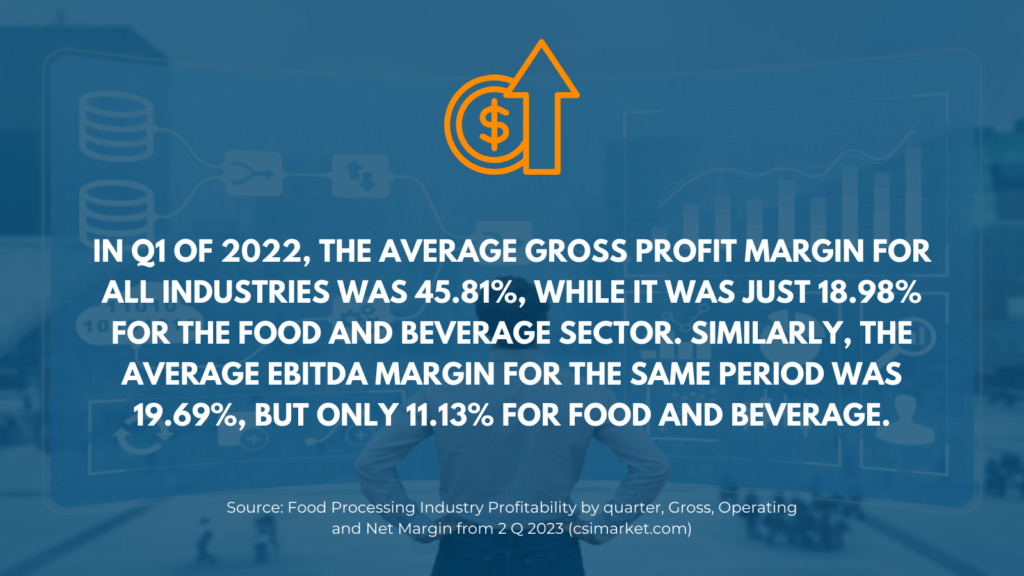
Profit margins in the food and beverage industry have often been modest. That's primarily because companies in this sector must bear various expenses while providing a cost-effective final product for everyday consumers – including paying personnel, procuring ingredients, maintaining equipment, and obtaining distribution contracts.

The measures reflect the reality of the situation.
So, what can manufacturers do to increase profit margins?
Of course, a food and beverage manufacturer can be financially successful; we're talking about products that practically everyone needs, so there will always be consumer demand. But how do you capitalize on those needs?
Maintaining or increasing your bottom line takes a sound strategy and informed decision-making in a competitive market.
Read on to learn about three of the most crucial best practices in food and beverage management that can increase profit margins and how purpose-built enterprise resource planning (ERP) technology can support your efforts on these critical fronts to help you steer your company toward a more prosperous future.
Top 3 profit margin makers that manufacturers can implement with ERP
1. Succinct inventory control
In the food and beverage sector, getting the most out of the raw materials you've bought and the final items you've made is a relatively straightforward aspect of profitability management, – but it can't be an afterthought. If you want to be sure you're getting a decent return on your material investments, this area of operations deserves closer examination.
Excellent expiry date management is essential in this situation because spoiling is one of the significant causes of waste in the food manufacturing industry. Use first-expiry, first-out (FEFO) picking methods after recording the expiration dates of all the lots you receive, ideally in a wholly digital interface like that offered by food ERP solutions.
Your finished products should go through the same procedure. At the end of your supply chain, the retailers and restaurants will be pleased if you log the freshness ranges and ensure the products are transported in time to maximize their shelf life. That also provides customer happiness and promotes brand loyalty.
Finally, remember that maintaining proper stock levels is essential for preventing shortages at crucial times. Again, ERP systems give you complete visibility into your warehouse and the inventory you have on hand, and they can even place orders for you automatically based on parameters you specify, ensuring that you're never in a bind and unable to meet your production goals.
2. Reliable demand prediction
You can increase your earning potential as opportunities in the market appear by being aware of what to anticipate regarding consumers' appetites for the products you create. Several factors can influence consumers' desire for any food and beverage product, making obtaining accurate and trustworthy demand estimates challenging.
Fortunately, ERP platforms designed for the food business give you access to the resources you need to create accurate forecasts. By integrating historical sales data and information on new market trends, you can determine when to increase the production of some lines while reducing that of others that might not be as popular during particular seasons or circumstances.
It will also assist you in deciding what ingredients to buy because you'll be able to predict whether you'll need more ingredients to achieve more significant achievement targets. The ability to cut or stop placing standing orders for other materials is another advantage if the items that depend on them are not profitable in the current market.
3. Dependable effectiveness and financial analytics
Identify and eliminate inefficient processes to maximize the efficacy of your production systems since they can be a significant financial drain. At the same time, you must be aware of when the supermarkets and restaurants you serve don't accept a particular item in your lineup.
The analytics features you need to investigate problems in your processes and pinpoint their underlying causes are included in ERP software for the food sector. That makes it easier to resolve the issue that is causing the problem. You'll constantly be aware of how well operations are being carried out thanks to an innovative system like a Food & Beverage ERP system since updates arrive in real-time.
Additionally, ERP designed for food and beverage enterprises like yours has tools for tracking the profitability of your items based on the inputs they need and how well they sell. With that knowledge, you can decide what to prioritize, reduce, or eliminate items for your future product lineup.
Tastier profits unlocked
Every food and beverage company has higher profitability as one of its main priorities. You need every advantage to stay abreast of the competition. If you want the best chance of achieving your financial goals, an ERP system specialized to your market is necessary for the above advantages and many more.
Yet, buying and installing any ERP program is insufficient if you want the cash to start coming in. You require a platform from a supplier who has in-depth knowledge of the food and beverage sector and has created their product with end users in mind, including the adoption of a user-friendly interface and industry-specific capabilities to meet your most challenging difficulties.
Ready to realize greater profits with a Food and Beverage ERP system?
The team of ERP consultants at Liberty Grove Software can direct you toward the best ERP solution for your business.
We'll be with you through evaluation, project planning, implementation, testing, training, and ongoing support to ensure your digital transformation success.
For a free consultation on how a Food and Beverage ERP can help your food manufacturing organization become more profitable, contact Liberty Grove.
Related reading:
Critical Success Factors for the Food Manufacturers (libertygrove.com)
Is Your Food ERP Delivering a Solid ROI? (libertygrove.com)
Best 10 Reasons to Move Your On-Premises ERP to the Cloud - Liberty Grove Software
About the author
Liberty Grove Software is an established Microsoft Partner that focuses on providing customers with sales, service, and support for Microsoft Dynamics 365 Business Central/NAV solutions and training and upgrades.
Over more than 25 years, Liberty Grove has assisted hundreds of customers with businesses ranging from small to mid-sized to Microsoft Partners in implementing, training, customization, and upgrading Microsoft Dynamics ERP solutions.
The organization is one of only a few companies worldwide that Microsoft recognizes as qualified to provide Business Central/NAV Upgrade Service Centers.
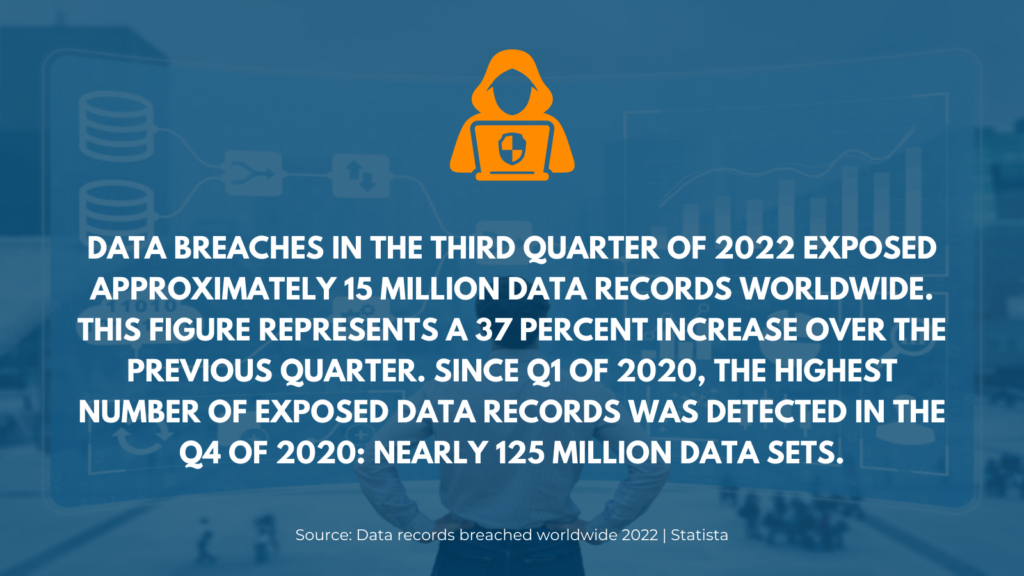
Read it and weep. With statistics like these, it's a wonder any executives can sleep at night. And if organizations aren't eligible for cyber insurance, they're at significant risk of a financially devastating cybersecurity breach.
Any firm using technologies and IT infrastructure must invest in cybersecurity insurance due to the rising danger posed by cybercriminals. Regrettably, increasing cyberattacks make it extremely difficult for insurance companies to accept new clients or validate claims from current ones.
Furthermore, because of the lengthy application and renewal processes, businesses frequently encounter rejection when obtaining cyber insurance.
But, while insurance protocols might seem to run the show, companies can have an insurance safety net with Cloud ERP technology.
First, let's take a look at reasons why you might be ineligible for insurance coverage. Then we'll discuss how Cloud ERP can be your sentinel for data protection.

What does cyber insurance entail?
To help reduce the financial risks connected to online enterprises or businesses that use technology, an entity or business might enter into a contract for cyber insurance. The policyholder pays a monthly or quarterly cost while the insurer bears the risk.
The cyber insurance market increased from US$ 9.73 billion in 2021 to approximately US$ 11.75 billion in 2022.
It demonstrated a compound annual growth rate (CAGR) of 20.7% for the previous two years. Yet, for various reasons, cyber insurance firms are hesitant to accept insurance offers from businesses or to accept claims.
Reasons why your business might be ineligible for cyber insurance
Companies can be denied cyber insurance coverage for several reasons. Typical explanations include the following:
Inability to provide evidence of suitable security measures
Insurance firms may consider businesses at high risk if they cannot demonstrate their security robustness while adhering to stringent legislation, security policies, best practices, and robust benchmarks. Allowing insurance companies to evaluate all preventive measures and evaluate security based on numerous indicators is the best approach to handle this.
Absence of protective measures
Another frequent justification for denying firms cyber insurance is a lack of preventative steps or best practices for cybersecurity. Because cybersecurity is such a problematic IT endeavor, companies cannot guarantee security. However, many businesses neglect to conduct regular audits, compliance checks, or penetration tests as part of their cybersecurity procedures.
That's the primary justification cyber insurance providers give for rejecting claims or applications, as the absence of preventative steps shows the business could not protect its systems.
Cyber insurance companies decline to bear risk since the risks of doing business with such enterprises vastly outweigh the benefits. Thus, businesses should proactively secure their perimeter before filing a claim or purchasing cyber insurance. It is a step in the right direction to hire penetration testers and security audit experts to examine the entire system and address any flaws.
History of data breaches
Insurance companies may see a corporation as a higher risk and refuse coverage or increase premiums if they have previously had a data breach. Insurance companies might be reluctant to offer coverage owing to the possibility of future breaches, even if there is a resolution to the problems that caused a breach.
In addition, insurers may perceive a corporation as too high of a risk to cover if a past breach resulted from a lack of security measures, such as insufficient firewalls or unpatched software.
When businesses show that their cybersecurity procedures have improved, they can reduce the risk of future breaches and raise their chances of receiving cyber insurance.
Failure to follow regulations
Companies are more likely to be denied coverage if they don't follow cybersecurity laws and regulations. For instance, a healthcare provider not adhering to HIPAA rules might not be approved for cyber insurance.
Companies must comply with the PCI DSS, SOC2, FedRAMP, ISO27001, and MPA compliance standards to be eligible for coverage. Insurance companies could see non-compliance as a higher risk of cyberattacks and other incidents, such as data breaches.
Absence of a plan for handling incidents
If an insurance carrier discovers that a business does not have an incident response plan, it may refuse coverage. That's because the absence of an incident response strategy shows that the company is not taking the necessary precautions to react appropriately during a cyber incident.
Industries at high risk
Healthcare and banking are two sectors more vulnerable to cyberattacks and may experience higher premiums or coverage denial rates. Insurers view these sectors as being particularly exposed to numerous risks and having a lot of sensitive data that could be compromised. Businesses should take the required steps to reduce risk and show insurers this.
Companies must comprehend cyber insurance policies and the justifications for coverage denials. Businesses can increase their likelihood of receiving coverage by improving areas where they are not meeting their insurer's requirements.
Now for the excellent news – Cloud ERP
Cloud ERP is rapidly becoming the choice of executives for data protection and more.
Why? Because much of an organization's most sensitive and vital data resides in ERP systems. Enterprise-wide concerns about data security have risen, and business executives are increasingly assisting in strengthening cybersecurity and spotting risks.
Executives must know where this information is kept, how it is protected, any potential hazards, and how to manage those risks.
ERP Security in the Cloud vs. On-Premises
Understanding the shared responsibility concept for security is crucial when switching from on-premises to cloud ERP. Security for cloud-based ERP systems is everyone's responsibility, not just that of the vendor.
Advantages of Cloud ERP Security Reduced Expenses
Because the cloud provider controls security, controlling security costs is significantly more affordable with cloud ERP. Systems for identifying and responding to security threats will be in place at the cloud provider, ensuring that any potential hazards are handled immediately following established protocols.
Customers benefit since the security expenses in the cloud ERP subscription prices minimize their security obligations. That gives IT staff more time to concentrate on other potential weak spots like application-level security and user access.
Here are some of the ways that cloud ERP can protect your organization's data:
Auto-Updated Software
One of the primary motives for using cloud ERP solutions is to avoid having to request approval from management before implementing changes. Any delays in updating your ERP could expose it to hazards associated with cloud ERP, such as hacker attacks. The cost of the cloud subscription includes automatic upgrades, guaranteeing current operation, and addressing Cloud ERP security issues.
Attempted Denial-of-Service
The ability to handle denial-of-service (DoS) attacks is a significant benefit of cloud ERP. When attackers flood the system with unnecessary requests to overwhelm it and prevent legitimate requests from being fulfilled, they commit a denial-of-service (DoS) attack. Cloud ERP systems are more protected from DoS assaults since they operate on scattered data centers worldwide. Moreover, cloud service providers have specialized teams to quickly and effectively respond to DoS attacks. While limited-service outages can happen, they are much less common than with on-premises ERP systems.
Compliance and encryption
Your systems and data are secure since cloud ERP providers offer encryption for data both in transit and at rest. Cloud ERP security technologies use HTTPS for internet traffic, SDKs for application-level encryption, and default settings for data storage encryption. Furthermore, cloud ERP solutions offer pre-built templates to save time and effort, making it simpler to comply with security compliance needs. Companies may maintain compliance in a few clicks, saving considerable installation time and work to support effective accountability, encourage financial scrutiny, and make risk-aware decisions.
Automatic software updates
ERP service providers fix threats or vulnerabilities by releasing security patches or software updates. Therefore, it is crucial to keep software updated to protect ERP data from any dangers. Software updates for on-premises ERP software were formerly infrequent since customers were discouraged from implementing the upgrade due to high project costs, complex architecture, extensive customizations, and significant downtime. Although clients have the option to enable security updates instantly, cloud ERP providers frequently release security upgrades that address the most recent threats and vulnerabilities. This is one of the primary benefits of cloud ERP systems and a significant factor in the rapid expansion of cloud ERP adoption.
Ability to assess the capacity for disaster recovery
If you encounter a disaster, Cloud ERP's Disaster Recovery (DR) services are designed to enable service restoration. To execute the DR strategy for the affected applications, your cloud ERP provider will decide if an occurrence qualifies as a catastrophe. Recovery Time Objective (RTO): The amount of time an application can be unavailable without seriously harming the company's operations is referred to as recovery time objective (RTO). The RTO is extended to consider the time needed to finish the upgrade if the decision to activate DR processes is made while an update is in progress. Restoration Point Goal: Your company's loss tolerance, or recovery point objective (RPO), is the maximum amount of data that can be lost without adversely impacting your operations. It is expressed as a time interval between the loss event and the most recent backup that came before it. The RPO does not cover any data loads in progress when the disaster happens. It's crucial to remember that the RTO and RPO do not cover adaptations that rely on external parts or third-party software. Non-critical fixes and enhancement requests are not supported while active failover events or recovery procedures are underway. Any problems brought on by third-party software or customizations are not the responsibility of your Cloud ERP provider. Production services may continue to function during the catastrophic event with reduced performance.
With Cloud ERP, you have the following benefits:
- complete control over selecting the right level of access for new users and the ability to revoke it when it is no longer necessary
- enterprise-wide centralized identity management and federated single sign-on means only users you have authorized have access to pertinent data, whether on-premises or across clouds (SSO)
- segregation of duties (SOD) is made possible by role-based access controls (RBAC), which prevent unauthorized access to sensitive data
- users only view information about the tasks particular to their jobs, and administrators configure job roles corresponding to work functions and data privileges.
Cloud ERP provides threat detection, remediation, and automated incident response: your ultimate security shield.
Conclusion
Even with proactive precautions, many businesses are denied coverage as the cyber insurance landscape rapidly changes and evolves. But, to improve their chances of acquiring coverage, companies should assess their cybersecurity posture and ensure they adhere to relevant country or state laws and regulations.
Liberty Grove can help companies locate weaknesses in their security posture and provide the tools, services, and knowledge required to secure their networks. Taking preventive actions like running penetration tests and putting security solutions in place increases the likelihood of a successful cyber insurance application.
Contact Liberty Grove for a complimentary consultation on securing your access to cybersecurity insurance coverage.
Related reading:
Free Up IT Resources by Moving Your ERP to the Cloud (libertygrove.com)
Best 10 Reasons to Move Your On-Premises ERP to the Cloud - Liberty Grove Software
About the author
Liberty Grove Software is an established Microsoft Partner that focuses on providing customers with sales, service, and support for Microsoft Dynamics 365 Business Central/NAV solutions and training and upgrades.
Over more than 25 years, Liberty Grove has assisted hundreds of customers with businesses ranging from small to mid-sized to Microsoft Partners in implementing, training, customization, and upgrading Microsoft Dynamics ERP solutions.
The organization is one of only a few companies worldwide that Microsoft recognizes as qualified to provide Business Central/NAV Upgrade Service Centers.
We rely on the Food and Beverage Manufacturing industry to provide us with options and to bring innovative, high-quality, and safe products to our tables. But the consistent delivery of these products represents a series of complex equations for food manufacturers.

So, how does the food manufacturer plan for future success in a competitive market?
Despite steady growth, the industry remains vulnerable to rising input costs, government regulation, and cost-related supply chain tension. Future food and beverage manufacturers must focus on production efficiency, supply chain management, and adapting to changing government regulations.
Innovation occurs in high-demand areas such as supply chain, cold storage, and traditional unit operations in legacy manufacturers and product categories. Disruptive technologies span the entire value chain and will have long-term, positive consequences. And the answer to all of that lies in a robust Cloud Enterprise Resource Planning (ERP) solution.
Here are some of the top factors that food manufacturers must address every day to maintain a competitive edge:
Focus on production efficiency
Food and beverage manufacturers know their high volume/low margin characteristics, which do not correspond well with rapidly rising input costs. In the future, these manufacturers must boost processing productivity by focusing on input management, inventory control, and waste reduction, all issues that can be managed through your ERP.
Controlling these cost drivers will assist businesses in meeting consumer expectations for competitive prices while also freeing up funds for new products to meet their varying needs. A robust ERP system allows companies to control costs and increase profit margins by implementing information systems that optimize product mix calculations, inventory level and cost tracking, and automated quality controls.
An all-inclusive supply chain management strategy
Food and beverage manufacturers who succeed in Canada and the United States in the future will be those who effectively manage relationships with both consumers and suppliers. Sharing information and integrating systems with suppliers will be critical, as collaboration should propel the industry forward.
Cloud ERP software provides controlled information access to supply chain partners and can automate routine tasks by providing up-to-date figures, purchasing requests, and budget control tools. These systems go beyond task automation by collecting analytical data with each transaction, increasing the potential for supply chain efficiencies.
You have no control over the global economy, but you do have control over the value of your relationships. While investing in new technologies can help with the innovation drive, it also starts by collaborating with suppliers in a mutually beneficial partnership. Working closely together and managing the entire supply chain will give manufacturers some wiggle room if rising costs continue to be an issue.
Increased SKU counts and specialty ingredients have increased exposure in the current environment. It is common for a food processor to handle 200 ingredients for 60 SKUs, even though a significant portion of their revenue comes from a few essential products.
When an ingredient is unavailable, the manufacturer faces additional challenges because a substitute ingredient may necessitate changes in everything from supply storage to processing requirements and even cleaning and traceability policies.
The willingness to invest in this area has resulted in solutions that use ERP systems and artificial intelligence (AI) powered algorithms to rapidly adjust to new supply constraints, real-time location tracking, and alternative input sourcing.
Staying abreast of Government regulations
For successful food manufacturers, government regulations are a constant and critical concern. Although regulations are necessary for customer safety, they can slow the introduction of new products and harm the manufacturing of existing ones.
Recent regulations indicate a food safety shift in emphasis from the regulatory realm to the marketplace. That means it will be up to food and beverage manufacturers to ensure compliance and readiness in an emergency.
Future food and beverage manufacturers must adapt quickly to new regulations as they become available. There is no substitute for monitoring regulatory developments, which tend to predict trends. Such regulations affect all companies in the industry, creating a small but significant window of opportunity for competitors to adapt faster.
Because the burden of ensuring quality and safety falls on manufacturers, highly advanced ERP systems can integrate new regulations with existing business processes, ensuring compliance in food processing while also managing performance and tracking inputs.
In the future, innovations in this industry will drive the progress of societies striving for health and sustainability; they'll also play a significant role in determining regional economic success, particularly for top manufacturing countries such as Canada and the United States.
Companies must be more proactive than ever in organizing and managing operations, utilizing all available tools to reduce external factors' impact on performance. It's a great time to be in the industry, as new technological solutions help solve business problems and improve our society.
For decades, many food manufacturers have needed help to collect good data. But not any longer. The food industry is poised for transformation as sensor technology advances and technology platforms become more accessible and affordable for small and medium-sized manufacturers. Food manufacturers can now better understand their ingredients, products, and operations.
Food Digitalization
Even the smallest food manufacturers must invest in digital technologies such as Cloud ERP to meet new industry standards for increased transparency and safety. The changes address compliance concerns and retailers' requirements that their vendors be able to participate in digital supply networks.
The more money you put into measuring your raw materials and finished goods, the easier it will be to improve your performance. For example, you may improve a product's shelf life by better understanding its water content through accurate, real-time measurement.
Using data-driven science to supplement human decision-making is beneficial to business. The ability to collect data from your operation will also help standardize work and reduce reliance on tribal knowledge held by key individuals.
Big data will also help to inform food science, such as cold-chain management and related R&D.
Automation, Robotics, and Industry 4.0
Autonomous systems will significantly impact the food industry. As sensor performance improves, some food manufacturers are implementing AI. Data acquisition systems can accurately characterize complex biological ingredients and products, allowing manufacturers to automate processes and derive the same value from predictive data analysis that other segments have for years.
Significant capital investments and new workforce skills in analytics and programming, which are in high demand across all industries, are required for Industry 4.0. Many smaller domestic manufacturers have found it challenging to implement automation, particularly for high-mix, low-volume work. However, the advantages of automation are numerous, including:
- Increased output efficiency
- The possibility of running operations around the clock
- Reduced labor requirements
- Increased machine uptime and lifecycles
- Quality and repeatability have improved
Consumers who understand their food are demanding healthier options and more transparent processes. They also want more customization and convenience in shopping, purchasing, and delivery. They are looking for brands that are committed to reducing their environmental impact.
Resource Allocation (Sustainability)
Regulations governing emissions, resource use, and waste will likely become more stringent in the food industry. The good news is that advanced technologies are making it possible to manage resources more efficiently.
Many food companies can significantly improve this area by learning how to quantify and measure waste streams. For example, there is a significant difference between the goal of "use more recycled resin in our HDPE tubs" and "increasing the recycled resin in our tubs from 10% to 20% will reduce our product's net carbon footprint by 15% while only losing 3% in rigidity."
And the key is in knowing how to measure the values – with your ERP technology.
Ready to reconsider your ERP?
Replacing a legacy ERP system with cloud ERP will result in significant organizational changes. Suppose you want to learn more about updating your ERP to a modern cloud solution or about the cost of ERP for small businesses. In that case, the Liberty Grove Software team of ERP consultants can guide you to the right ERP solution for your organization.
We'll provide the services you need to guide you through evaluation, project planning, implementation, testing, training, and ongoing support.
Contact Liberty Grove for a complimentary consultation on how Cloud ERP can future-proof your food manufacturing organization.
Related reading:
Is Your Food and Beverage ERP Recession Proof? - Liberty Grove Software
Best 10 Reasons to Move Your On-Premises ERP to the Cloud - Liberty Grove Software
About the author
Liberty Grove Software is an established Microsoft Partner that focuses on providing customers with sales, service, and support for Microsoft Dynamics 365 Business Central/NAV solutions and training and upgrades.
Over more than 25 years, Liberty Grove has assisted hundreds of customers with businesses ranging from small to mid-sized to Microsoft Partners in implementing, training, customization, and upgrading Microsoft Dynamics ERP solutions.
The organization is one of only a few companies worldwide that Microsoft recognizes as qualified to provide Business Central/NAV Upgrade Service Centers.
Manufacturing companies are increasingly abandoning on-premise applications for Cloud ERP for Manufacturing. Cloud-based ERP applications are the industry's future because of their numerous benefits, including reduced hardware, database, and operating system software requirements and fewer internal or outsourced maintenance teams. And the icing on the cake is that you always have the confidence that you're running the most recent version of your ERP.

Manufacturing companies must transform to meet today's challenges, and the software vendors they rely on must adapt their products to be better suited to the next generation of organizations. That's what is happening with Cloud ERP for Manufacturing.
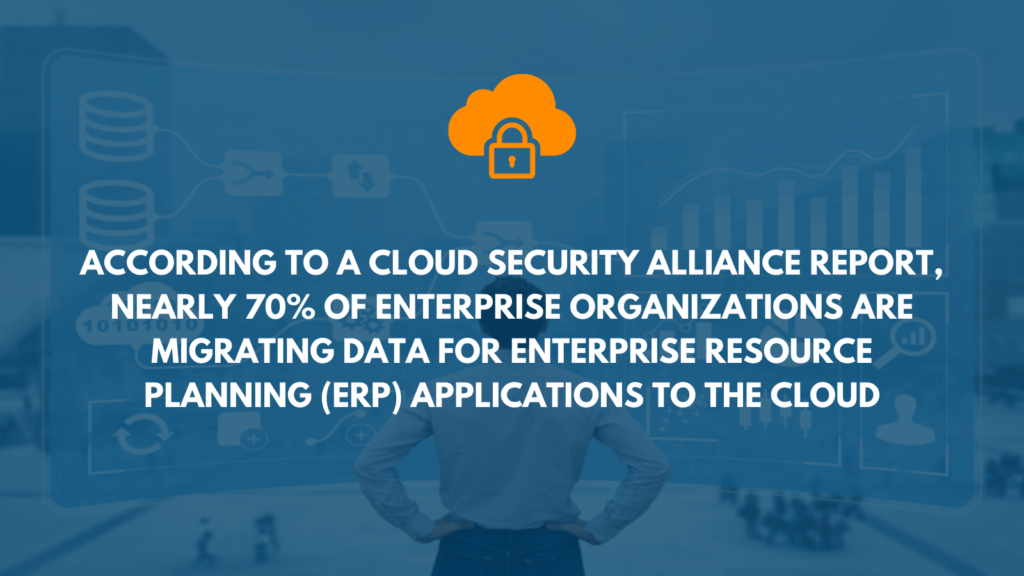
7 ways ERP is evolving and tips for choosing a Cloud ERP for manufacturing vendor
#1 Integration and Extensibility
If flexibility and ease of use are today's top software priorities, ERP's direction fits the bill. ERP systems will become easily extensible platforms that match individual companies' business processes and allow users to build extensions in whatever technology they prefer — without users needing to understand the ERP's internal workings.
Rather than coding, soon, we can expect to extend and integrate ERP using standard technologies, then use APIs and extensibility toolkits to support them. There will also likely be a high level of integration with existing productivity tools such as Teams, Slack, and Zoom.
#2 Interaction Between Humans and ERP Systems
With hundreds of menu items, thousands of screens, and millions of interdependent fields, an ERP can no longer do everything. Formerly an invasive, complex system with a user interface and difficult-to-understand processes – and where users went to begin a transaction – ERP is evolving into a pervasive, easy-to-use, self-driven tool based on analytics that invites the user into a conversation.
We are close to a future where people can complete 80% of their tasks through a personal experience provided by an enterprise digital assistant. When you can't achieve a job via chat because it is too complex, the system knows what additional information it requires before proceeding.
#3 SaaS: A Case of "When," Not "If"
The burgeoning global ERP software market will be worth $66.38 billion by 2026. The trend suggests that many businesses pursue digital transformation aggressively – and faster than expected.
Moving to the cloud is inevitable and part of many companies' IT plans. Hybrid will be around longer as a stepping stone for companies concerned about security, but businesses are rapidly shifting entirely to subscription-based cloud solutions.
#4 Standardization by Vertical
Many businesses are considering this and are already promoting this standardized, templated solution. It's quicker, less complicated, and less expensive, just like using templates in other aspects of business life. You can expect to see initial implementations accelerated through automation and pre-configured vertical-specific solutions that leverage already proven industry standards.
#5 Service Up, Software Down
Professional services is not a scalable business model; unfortunately, it's a model with low margins. As a result, these software vendors will likely shift their focus from selling services to selling products, with any post-implementation work handled by partners. The vendor's selling software and services balance will shift, at least for those selling vertical solutions and templated implementation models.
#6 "Lift and Shift" vs. "Re-Architecting"
Your ERP solution must be designed specifically for your deployment scenarios for you to benefit fully from its operational efficiencies, customizations, integrations, extensibility, and user experience.
When a "lift and shift" transition is performed on a hosted solution, legacy customizations will remain; you'll always be dealing with the same problems, and testing will be required to ensure everything works when the vendor updates.
#7 A Better Understanding of AI Hype
Although we've jumped on the AI hype train and discussed automation at length, AI needs to be more focused. Machine learning can accomplish much, but you can also achieve much without it. It is not "intelligence" but rather math.
It always begins with a use case – you must understand the problem you're trying to solve, or AI cannot solve it for you. Examine the various business processes within the company and find a way to automate them.
Does your vendor follow through on their promises?
Deloitte refers to many of the elements of ERP's evolution mentioned above in its guide for selecting ERP software and asks, "With marginal functionality differences between platforms, how can organizations take a more progressive approach to ERP selection for core financials?"
Look at the vendor's product strategy and see if they walk the walk. Check to see if their mission statement and product roadmap genuinely reflect the vision they promote in their marketing.
ERP is evolving and changing to meet users' needs and business objectives. As the market continues to experience seismic shifts, tech leaders should watch for these trends.
Ready to re-evaluate and upgrade your ERP?
Replacing a legacy ERP system with cloud ERP for manufacturing solutions will result in significant organizational changes. If you want to learn more about updating your ERP to a modern cloud solution or about the cost of ERP for small businesses, the Liberty Grove Software team of ERP consultants can guide you to the right ERP solution for your organization.
We'll provide the services you need to guide you through evaluation, project planning, implementation, testing, training, and ongoing support.
Contact Liberty Grove for a complimentary consultation on how a Cloud ERP for manufacturing can reduce costs and elevate your business to the next level.
Related reading:
Best 10 Reasons to Move Your On-Premises ERP to the Cloud - Liberty Grove Software
How Can Cloud ERP Benefit International Companies? (libertygrove.com)
About the author
Liberty Grove Software is an established Microsoft Partner that focuses on providing customers with sales, service, and support for Microsoft Dynamics 365 Business Central/NAV solutions and training and upgrades.
Over more than 25 years, Liberty Grove has assisted hundreds of customers with businesses ranging from small to mid-sized to Microsoft Partners in implementing, training, customization, and upgrading Microsoft Dynamics ERP solutions.
The organization is one of only a few companies worldwide that Microsoft recognizes as qualified to provide Business Central/NAV Upgrade Service Centers.