If William Shakespeare could say that a rose by any other name is still a rose,1 then it might not be far from the truth for us to say that a cloud by any other name is still a cloud. Shakespeare's adage is used to imply that the names of things do not necessarily affect what they really are.
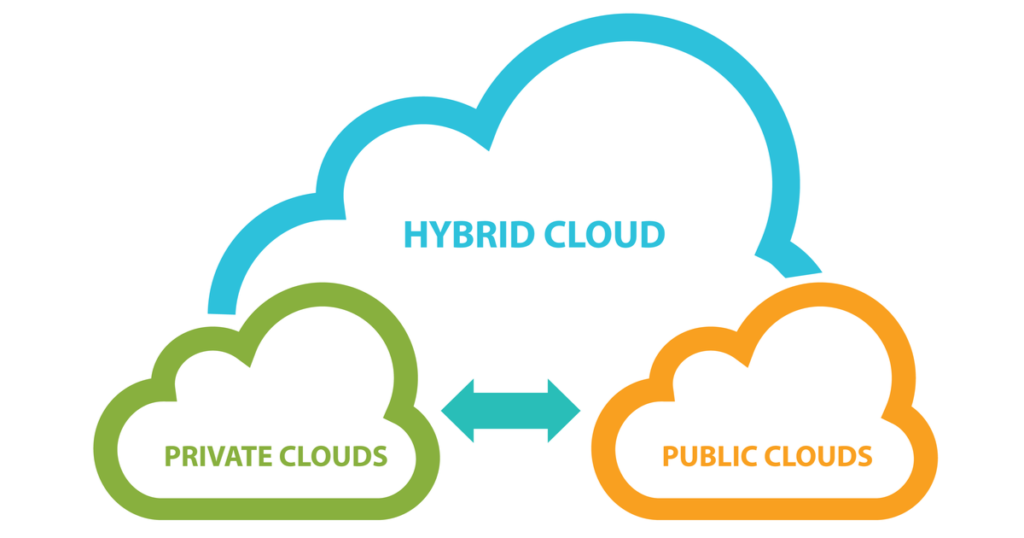
Is it possible that when boiled down to its essential core – whether it's a private cloud, a public cloud, a hybrid cloud, or a multi-cloud environment – it is undeniably still a cloud? Of course, it's possible. But that doesn't negate the differences among those four types of clouds.
Let's first look at how they differ. And then, we'll look at the pros and cons of choosing a public cloud for your company.
Private, Public, Multi-Cloud, and Hybrid Clouds
What's the difference between multi-cloud and hybrid cloud computing?
Both "multi-cloud" and "hybrid cloud" refer to cloud deployments that integrate more than one cloud. However, they differ in the kinds of cloud infrastructure they include. A hybrid cloud infrastructure blends two or more different types of clouds (such as a public cloud and a private cloud), while a multi-cloud environment includes several clouds of the same type.
A good analogy would be that a hybrid cloud is like combining apples and oranges, while multi-cloud is like combining different types of apples (such as macs and empires).
What are the fundamental differences between a private cloud and a public cloud?

A private cloud is a cloud service that is not shared with any other organization. The private cloud users have the cloud to themselves. By contrast, a public cloud is a cloud service that shares computing services among different customers, even though each customer's data and applications running in the cloud remain hidden from other cloud customers.
A good analogy would be that a public cloud is like renting an apartment, while a private cloud is like renting a house. The house is more private, but it also typically costs more to rent. Also, maintenance of an apartment is generally handled by the building supervisor, whereas it's harder to get a contractor out to fix a problem in your house. Sometimes, the tenant in a house may be responsible for their own maintenance.
Considerations for Choosing a Public Cloud
Public clouds are the most common type of cloud computing deployment. The cloud resources (like servers and storage) are owned and operated by a third-party cloud service provider and delivered over the internet. With a public cloud, all hardware, software, and other supporting infrastructure are owned and managed by the cloud provider. You can securely access services and manage your account using a web browser.
Advantages of public clouds:
- Lower Costs – No need to purchase hardware or software. You pay only for the services you use.
- No Maintenance – Your cloud service provider takes care of the maintenance.
- Near-unlimited Scalability – On-demand resources are available to meet your current and future business needs.
- High Reliability – A vast network of servers worldwide ensures against failure.
- High-Level Security – Cutting-edge security provided by elite teams of cyber experts monitoring potential threats 24/7.
Microsoft Azure is an excellent example of a public cloud.
Is a Public Cloud Right for You?
We are here to assist you as you weigh your cloud options. Just contact Liberty Grove Software. Call 630-858-7388 or email us at nav@libertygrove.com.
1The actual quote from Romeo and Juliet is: "A rose by any other name would smell as sweet."
Related Post
The Top Key Benefits to Migrating Your ERP to the Cloud

When you're ready to implement a new Enterprise Resource Planning (ERP) solution for your food & beverage industry company, you want a rapid fix, not a long, drawn-out deployment. At the same time, you also do not want to cut corners. That's never a good idea.
At , where we specialize in the implementation of ERP software for food & beverage companies, we have developed a deployment process that is dependable, quick, and comprehensive. Our approach is founded on more than 25 years of experience, helping food & beverage companies like yours benefit from world-class ERP systems' many advantages.
A Winning Combination of ERP Software Products Designed for You
Here's how we deliver on our promise of a rapid, reliable, fully integrated ERP deployment that is designed and purpose-built specifically for food & beverage companies.
We start with Microsoft Dynamics 365 Business Central, a groundbreaking native cloud ERP solution that deploys quickly and connects every aspect of your financials and operations. Our team of Microsoft ERP experts then ensure that you can make the most of your ERP system by applying best practices for a significant boost in productivity.
With Business Central ERP, you can achieve your vision for your company's future, relying on real-time data about your operations so you can proactively adjust to the digital road ahead, win more business, and better compete. Business Central includes:
- Supply Chain Management (SCM) and integration to ensure that your customers get everything they ordered when and where they need them
- Warehouse Management (WMS) so you know exactly what you can sell and deliver
- Manufacturing so you can produce what is required.
And beyond that, Business Central is highly adaptable, so you can easily extend Business Central for specialized industry requirements, in this case for the unique needs of the food & beverage industry.
We then add DynamicsFoodERP to your Microsoft Dynamics 365 Business Central ERP's rock-solid technology because a generic ERP system doesn't cut it. The result is a solution that caters to food & beverage companies.
With the winning combination of Business Central and DynamicsFoodERP, you will have the ability to:
- Manage products with a limited shelf life
- Manage expiration dates
- Control picking dates
- Implement an agile production schedule
- Trace all products, so you know where and when the products were produced and by whom
- Comply with ever-changing regulatory requirements
- Exert a high level of quality control
- Exercise container management
- Manage catch-weights
Position Your Food & Beverage Company for Success
If you're still hungry for more information, here's a link to our DynamicsFoodERP microsite. Or, just contact by calling 630-858-7388 or emailing nav@libertygrove.com.
Related Post
The Very Best ERP for Food Glorious Food!
Were you looking for good news in 2022? Sadly, I can't comply. We're two years into the COVID-19 pandemic, and there is no clear end in sight. Many of you in the Food & Beverage industry have already suffered from plant shutdowns and a decimated workforce. As if that wasn't enough, now there are…
New Challenges Facing the Food & Beverage Industry
As a provider of ERP (Enterprise Resource Planning) software solutions for the Food & Beverage sector, the team at makes a point of following industry-related news. And it's not good.
In fact, it's a bit disheartening. The emphasis has moved from shutdowns and staffing to…
Logistics and Transportation
That's not to say that plant shutdowns and staffing issues are no longer issues. They are. But instead of the focus being on factory workers, it is on truckers and dock workers.
A recent article in Business Insider noted that there is currently a shortage of more than 80,00 truckers. That is a staggering number! But "it's not just truck drivers — the semi-trucks they rely on are also facing a shortage, with some dealers already sold out for the year." 1
Further compounding the issue is the global computer chip shortage. Since every aspect of the supply is interconnected, the computer chip shortage has pushed prices for new and used semi-trucks significantly higher. Some truck sales prices have climbed more than 86% and are expected to continue rising in 2022.1
As a result, and because truck drivers move upwards of 70% of US freight, our ports are facing historic delays, with backlogs of as many as 105 container ships compared with zero to two pre-pandemic.1
So, the challenges our clients in the Food & Beverage sector are experiencing emanate from various shortages, backlogs, and rising prices, all of which are wreaking havoc on an already strained supply chain. The rising costs make it difficult for companies to do business profitably at a cost not excessive for their customers.
The Bottom Line
It is terrible enough for companies that produce, package, and distribute food and beverage products locally. For importers, the situation is far direr, with import fees that in many cases have quadrupled over the past year. The extent to which this will impact their sales is yet to be ascertained, but the statistics will begin to dribble over the next few months.
The Solution
One way to mitigate these companies' problems is to cut operating costs. That's where the team at Liberty Grove can help. DynamicsFoodERP from Liberty Grove allows small to medium food and beverage distributors and manufacturers to stay ahead of rapidly changing regulations, identify and head off potential supply chain disruptions, and more. Powered by Microsoft's Dynamics 365 Business Central Cloud ERP rock-solid technology, Food & Beverage companies can simplify operations to compete better.
Find some relief. Take the next step…
Contact by calling 630-858-7388 or emailing nav@libertygrove.com.
Related Post
The Very Best ERP for Food Glorious Food!

If you’re looking for ways to cut costs and increase profits in 2022 (and who isn’t?), then moving from your on-premises Enterprise Resource Planning (ERP) software to an ERP solution in the cloud is a no brainer. The solution we recommend is Microsoft Dynamics 365 Business Central (BC).
Microsoft Dynamics 365 Business Central (BC)
Business Central is a groundbreaking Cloud ERP solution that connects finance, sales, service, and operations. Moving to the cloud with Business Central gives your company the competitive edge needed to survive and thrive. Let me tell you more about that.
How to Survive and Thrive in 2022 and Beyond
With Microsoft Dynamics 365 Business Central in the cloud, you save time, save money, and access data in real-time for making informed business decisions.
- Work on-the-go securely
- Close financials faster
- Access your ERP anytime, anywhere, on any device
- Gain efficiency with innovative role-based workspaces
- Make data-driven decisions with BI dashboards and reports
- Add industry-specific features and functionality, such as…
- Integrated supply chain ensures that your customers get everything they ordered, when and where they need them
- Warehouse management so you know what you can sell, deliver, and avoid backorders
- Manufacturing so you can make what is needed with…
- Deep BOMs, shop floor routing, smart sensors, and more
- Use intelligent automation and workflows to streamline your business processes
- Accelerate the sales process by delivering on promises
- Regulatory compliance apps
And of course, Microsoft Security
You can’t survive and thrive if your system is hacked or hijacked for ransom. That’s why Microsoft is connected to more than 3,500security professionals globally across their product development teams, information security groups, and legal teams to protect Microsoft’s cloud infrastructure and services, products and devices, and internal resources.
To safeguard your people, data, and infrastructure, Microsoft deploys integrated security, compliance, and identity solutions built to work across platforms and cloud environments. To catch what others might miss, Microsoft relies on leading AI, automation, and expertise to help you detect threats quickly, respond effectively, and fortify your security posture.
Business Central Has It All
Despite everything we have written about above, all the features and benefits of Microsoft Dynamics 365 Business Central, we could still fill a doorstop-sized tome with additional information.
Instead, we encourage you to contact by calling 630-858-7388 or emailing nav@libertygrove.com.
Related Post
Power Up Microsoft Dynamics 365 Business Central with Electronic Banking and Bank Rec

The calendar says that it’s December, and you know what that means. Time to start thinking about and preparing for your year-end close.
In Microsoft Dynamics 365 Business Central (BC), closing your books involves two high-level processes. Close the accounting periods.
- Close the accounting periods.
- Transfer the balance in the income statement general ledger (GL) accounts to the retained earnings account.
That’s what must happen at a high level. But as usual, the devil is in the nitty-gritty, step-by-step details.
Next, there are two setup tasks.
- If you use journal batch or line workflow approvals, you must disable them.
- If you have enabled mandatory dimensions, you must remove the code from each General Ledger account dimension.
Now you’re ready to dive into the nitty-gritty, which involves 12 more steps.
- Search for Accounting Periods in the search box.
- In the accounting period window, review the accounting period that needs to be closed. If that period has not already been closed, click on the Close Accounting Period function on the ribbon.
NOTE: If the accounting period that needs to be closed has not already been created, you can easily do that now by following steps 5 and 6 below. Then return to Step 3. - Once you have clicked the close year function, the system will ask you to review the accounting periods that need to be close. If everything is as it should be, you can then click YES to run the close year function.
- Once the close period function has been executed, closed, and date locked, the Boolean of the accounting periods gets checked.
- Now it’s time to create a new fiscal year (if one has not already been created) by using the Create Period function.
- Now, go ahead and enter the start date and the period length for the period you’re creating. Click OK.
- Before transferring the Income Statement balances by running the close income statement batch job, it’s essential to ensure that the balance sheet accounts are properly marked Balance Sheet and that the income statement accounts are properly marked Income Statement in the Chart of Accounts (COA), because the system will use this field to transfer balances to the retained earnings account.
- Search for Close Income Statement in the search box.
- Enter the appropriate parameters in the boxes on the next screen and click OK.
- The system will now automatically transfer your balances from the Income Statement to the Retained Earnings account, and a journal line will be created for review in the General Journals.
- Search for General Journals and select the batch created for the year-end process.
- Review the transactions, click POST, and post the balance to the retained earnings account.
CONGRATULATIONS!!! You just closed your books on Business Central. This calls for confetti 😊
NOTE: The above procedures are essentially the same for Microsoft Dynamics NAV.
Tell Us What You Think
Does it look easy or hard to you? Lots of searching and clicking and transferring and posting? Would you like someone on the Liberty Grove Team to walk you through it? We would be happy to oblige.
Contact by calling 630-858-7388 or emailing nav@libertygrove.com.
Related Post
Top 5 Tips for a Stress-Free Year-End Close

It will soon be time to close your books for the fiscal year 2021. Fortunately, the year-end close process gets easier every year because most of it is now automated, especially if you’re running Microsoft Dynamics 365 Business Central. You may remember when closing your books was a months-long process, and that is no longer the case. You should be able to close your books in just a few hours.
Be that as it may, it’s still a good idea to prepare and ensure that you have covered the basics. Trust me. A little prep can go a long way toward a stress-free year-end close.
Note: If I had to summarize the essence of the tips provided below, I would say that it boils down to this:
The devil is in the details.
Planning
Take a moment to familiarize yourself with the process. After all, this is something you only do once a year. It, therefore, stands to reason that you would need to refresh your memory on how it’s done. Estimate how much time you think will be needed to accomplish each step in the closing process.
Preparing
Think ahead.
Know the order in which you need to close each module.
Know what steps you will need to follow.
Posting
Post everything you possibly can across all modules because open transactions will only be a headache during the close process. Check to make sure that all transactions are posted to the proper year. Do not post transactions in the new year until you have closed the current year for that module
Prevention
We all know that an ounce of prevention is worth a pound of cure. That’s why, before proceeding to your close, make a complete backup of your system. Make a new backup before each module you close. This way, you have something to go back to, just in case…
Then, after all the transactions are posted, performing a soft close of your periods will prevent posting to those periods when the module has been closed.
Processes
Closing your books on Microsoft Dynamics 365 Business Central is a two-step process.
First: Close the accounting periods
Second: Transfer the balance in the income statement general ledger (GL) accounts to the retained earnings account.
Remember! Your users must be out of the system when performing the close.
Stay Tuned for MORE Details from
The guidelines above address, in the most general terms, the 1) planning, 2) preparing, 3) posting, 4) prevention, and 5) processes involved in closing your books on 2021 in Microsoft Dynamics 365 Business Central. Stay tuned to our blog for the next post that will provide detailed, step by step instructions
Coming Soon: “Closing Your Books on Business Central: Step by Step.”
You might have questions about the closing process NOW. We have answers NOW
Contact by calling 630-858-7388 or emailing nav@libertygrove.com.
Related Post
Get More from Microsoft Business Central with Advanced Email Functionality

What do 22 years of an exclusive focus on Microsoft Dynamics NAV mean for you?
To begin with, it means that we’ve executed more than 700 successful Microsoft Dynamics NAV upgrades. It means that on average, we conduct nearly 3 upgrades every month. That’s a track record worth thinking about when you choose a Microsoft Dynamics NAV partner for your company.
Because of our longevity in the NAV world and thus our familiarity with every version of NAV from the earliest versions of Navision to NAV 2018, we also specialize in upgrades. We are, in fact, one of only a handful of Microsoft-recognized NAV Upgrade Service Centers in the world.
One other key element in positioning ourselves as a true NAV expert is our excellent reputation. Indeed, the high quality of our work is our brand. We will therefore not allow any project to fail, or any customer to become a dissatisfied customer.
Our Upgrade Process Is as Easy as 1-2-3 Take a look and you’ll be sure to agree that nothing could be easier than this 3-part process:
Part 1 – Fill out a discovery form.
Part 2 – Arrange for us to get a copy of your database.
Part 3 – We provide you with a FIXED-PRICE quote!*
Part 3 is a favorite among our customers because it eliminates financial risk from the upgrade process. It means you can budget your upgrades with accuracy and peace of mind.
*The only exception to this process is that if you have extensive customization's and/or third-party add-ons to your system. In that case, we will need additional information to complete our quote.
If you’re currently in the process of choosing a Dynamics NAV partner, for a new implementation or an upgrade, there are several basics that you’ll want to consider. To help you find the right partner for your company, Liberty Grove has developed a detailed checklist that you should run through to ensure that you’re leaving no stone unturned.
You can download the Liberty Grove “Choosing a NAV Partner Checklist” with our compliments.
Meet the Passionate Liberty Grove Team
We’d also like to invite you to meet the Liberty Grove team of Microsoft Dynamics NAV experts. Among them are NAV developers, coders, MVP's (Most Valuable Professionals), authors, trainers, and project managers – all with the relevant Microsoft Dynamics NAV certifications and credentials.
Here’s how to contact us in Chicago 630-858-7388, in Toronto 416-646-8484 and by email nav@libertygrove.com.
We look forward to speaking with you soon.

Poor, hungry Oliver Twist would have been shocked by the quantity and quality of the glorious food we put on our table, no less than three times a day! In 1830s England, even Charles Dickens would have drooled over these tantalizing dishes.
But neither Twist nor Dickens could have imagined, in their wildest dreams, how the has evolved over the last two centuries. Nor could they have imagined the computer software and systems that power our economy's Food & Beverage sector.
Compliance and Regulation
Much like the Pharmaceutical industry, the Food & Beverage industry deals with products that are ingested into the human body and have expiration dates. Therefore, these industries must meet the strictest compliance and regulatory requirements, including the ability to track and trace their products down to the level of lot and serial numbers.
Both sectors are strictly controlled by the FDA, the Food and Drug Administration. Food, beverages, and pharmaceuticals cannot and do not appear on the shelves of supermarkets, grocery stores, health food coops, pharmacies, or drug stores unless they have been FDA approved. And the FDA approval process is rigorous indeed.
Due to the pandemic, the average person is considerably more aware of what is involved in the FDA approval process than we were a mere two years ago, in a more carefree pre-pandemic world. The media have educated us.
Before and Beyond Compliance and Regulation
The FDA cannot approve a product until it has been manufactured. Track and trace do not kick in until a product is shipped. In other words, the food you eat and the beverages you drink have to be manufactured and distributed like any other product that you can think of. To handle the manufacture and distribution of food and beverages, software is required, specifically, the ERP (Enterprise Resource Planning) software that is at work behind the scenes every step of the way. And…
The very best ERP software for Food & Beverage companies is: DynamicsFoodERP
The team at does not make that statement lightly. Our team has been implementing ERP software systems since 1996. So, I can safely say that, with 25 years of experience, we are intimately familiar with the very best ERP solutions. But it's not just our experience that comes into play. Because DynamicsFoodERP is also built on the collective experiences of the more than 200 companies that run it today.
DynamicsFoodERP
DynamicsFoodERP is both Certified for Microsoft Dynamics (CfMD) and purpose-built for the food & beverage industry. It addresses the needs of both distributors and manufacturers in the Food & Beverage sector. Whether it's quality control, container management, catch-weight, in-line scales, or labeling printing, DynamicsFoodERP covers it all. There are more than a dozen industry-specific functional enhancements incorporated in DynamicsFoodERP.
Those functional enhancements are not just industry-specific; they are also segment-specific. This is critical because the requirements of a company in the Fruit and Vegetable segment are vastly different than the needs of the Bread and Bakery segment or the Confectionary segment. DynamicsFoodERP incorporates functionality for six of the major segments within the Food & Beverage industry:
- Fruit and Vegetable
- Bread and Bakery
- Confectionary
- Dairy
- Fish
- Meat
Specific functionality has been added to Microsoft Dynamics 365 Business Central to ensure that the overall system seamlessly fits the business processes for each segment. Companies that implement DynamicsFoodERP benefit from this specialized functionality while still enjoying an orderly, fully integrated ERP solution.
Take the next step…
Contact today by calling 630-858-7388 or emailing nav@libertygrove.com or request a private demonstration.
Related Post
Doing Food & Beverage Industry ERP Right, So We Can All Eat, Drink, and Make Merry

It’s almost time for User Group Summit 2019 and the excitement is building. Many of our team members and clients will be attending. And they’re all scouring the agenda to figure out which they want to attend. It’s challenging because there are so many sessions that sound great.
I’m Andrew Good, President, and CEO at , where a sizeable number of our clients are in the manufacturing space. So, I’ve taken the liberty (pun intended!) of listing our top recommendations for BC/NAV manufacturing sessions that are being presented by other Dynamics partners who have value-added insights to share.
My top 3 session picks in the BCUG/NAVUG Manufacturing category
Summit Session ID: MFG63Title: Get Started Today with MRP
Presenting Partner: Accent Software, Inc.Date: Wednesday, October 16, 2019Time: 4:30-5:30 PMCPE Credit: 1Brief Description: One of the most underutilized aspects of Dynamics 365 BC/NAV is the power of the Planning Worksheet for calculating the Master Production Schedule (MPS) and Material Requirements Planning (MRP). This session is designed to give you enough information to start utilizing this amazing tool. Most companies experience a high ROI from implementing this out-of-the-box Worksheet.
Summit Session ID: MFG59Title: Do You Need a Manufacturing Add-on or is Core NAV Enough?
Presenting Partner: Accent Software, Inc.
Date: Thursday, October 17, 2019Time: 10:45-11:45 AMCPE Credit: 1Brief Description: Learn the depth of manufacturing functionality available out-of-the-box with BC/NAV. This session will highlight the manufacturing capabilities available so you can avoid reinventing the wheel. We’ll cover what BC/NAV does well, what it does all right, where it leaves off and where a third-party add-on solution would pick up.
Summit Session ID: MFG57Title: Lessons Learned from a Successful WMS Implementation
Presenting Partner and Customer: LIDD and Garner Foods
Date: Friday, October 18, 2019Time: 9:45-10:45 AMCPE Credit: 1Brief Description: This session shares a case study from community member Garner Foods, about their WMS implementation in their food manufacturing facility. It's a great opportunity to hear the inside story of why they decided to take on this challenge, what their approach was, lessons learned, and the benefits and surprises they've seen.
______________________________________________
Now that I’ve shared the above recommendations with you, I’d also like to tell you about the three manufacturing sessions where I will be presenting.
My Summit Sessions
Summit Session ID: MFG50Title: Peer to Peer Solutions: Manufacturing Q&A Panel Discussion
Presenting Partner: Liberty Grove Software
Date: Wednesday, October 16, 2019Time: 12:45-1:45 PMBrief Description: Everyone in our community has challenges they’re trying to solve, and insights they’ve gained. Our expert panel will lead this roundtable discussion so you can get your questions answered and share your experiences with others who are focused on Manufacturing.
Summit Session ID: Partner Solutions ShowcaseTitle: Getting Control – Food and Beverage and more… in Business Central
Presenting Partner: Liberty Grove Software
Date: Wednesday, October 16, 2019Time: 3:15-4:15 PMBrief Description: Take control now! If you’re considering a move/upgrade to Business Central, this is a great time to look at options for replacing legacy code with purpose-built food functionality. Learn more about how our integrated solution coupled with industry-leading add-ons will allow you to get more out of your investment with less customization. Learn about our clients’ successes with DynamicsFoodERP, Anveo, Continia, and EAM/CMMS. We are your experts for all things related to Food & Beverage.
Summit Session ID: MFG56Title: What Else Can You DO with Manufacturing?
Presenting Partner: Liberty Grove Software
Date: Thursday, October 17, 2019Time: 1:30-2:30 PMCPE Credit: 1Brief Description: Far from a one-trick pony, there are many creative applications for the manufacturing functionality in your BC/NAV system. Are you looking for ways to improve data accuracy and efficiency? You'll hear real-life examples of what others have done to integrate BC/NAV into their operations in creative ways.
Visit Liberty Grove Software at Summit
When I’m not presenting, I’ll be in the Expo Center at the Liberty Grove Software booth, 1416. I hope you’ll come visit me there. I know that many of you are looking for a smooth upgrade path to Business Central from NAV. I’d love to meet you so we can chat about your upgrade plans. I’ll also be more than happy to answer any questions you might have about your Microsoft Dynamics NAV/BC system.
Between now and then, you can always reach us by calling 630-858-7388 or by emailing us at summit@libertygrove.com.
Related Posts
Optimize Your UserGroupSummit 2019 Experience: Our Top Pick Microsoft Dynamics NAV/BC Sessions
Fact
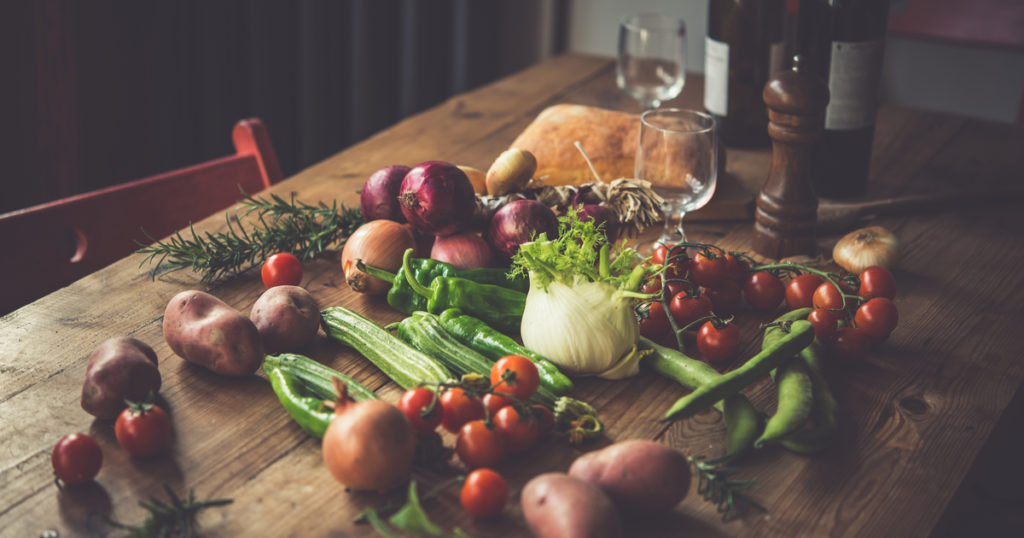
Farm-to-Fork, better known as Farm-to-Table, is not just a marketing ploy used by a restaurant or two, here and there. It’s actually a “Social Movement” that promotes serving local food and beverages at restaurants and school cafeterias, preferably purchased directly, preferably from local sources. The food may indeed come from area farms, as the title of the movement implies. But the food and beverages may also come from wineries, breweries, ranches, fisheries, and the like. Again, preferably local and preferably purchased directly.
Fiction
Note that I have used the word “preferably” 4 times in the above section. That is because there is no law, regulation, charter, or a strict set of guidelines to dictate precisely what “local” means. Town, county, state? What about the farm that’s only 2 miles away from the restaurant but lies just across the border in another state?
What percentage of the food served must be purchased locally for a restaurant to be part of the food-to-table movement? Or claim to be? What’s more, even if there were some parameters, that percentage could vary from one meal service to another. The mozzarella in your lasagna today may be locally sourced this week and not next week.
It is often the case that restaurants cannot source all the food they need for dishes locally, so only certain dishes or only some ingredients are labeled as local. But who reads the fine print even if there is the fine print?
Friction
Despite the growth in farm-to-table restaurants, critics argue that it is merely a fad. They point at millennials and their obsession with food, and others point out that farm-to-table tends to be relatively less affordable than other forms of food and dining. Still, others argue that the term “farm-to-table” in and of itself is easily misunderstood. Consumers may believe that farm-to-table foods are healthier, which may or may not be backed up with actual nutritional content data.
Fraud
From the East coast to the West coast, investigative reporters have found widespread fraud in the claims made by farm-to-table restaurants. For example, in many cases, the restaurant may have previously purchased food from local sources but has since switched to different suppliers without updating the menu. Sad but true.
Flip Side
Despite the sullied reputations of some farm-to-table establishments, many restaurants have genuinely embraced the movement. The benefits are notable. For example, it reduces pollution and emissions because the distance from the source to the restaurant is so much shorter. Also, supporting the local small-scale farms could lead to more jobs in local communities.
Food ERP from Liberty Grove
Whether the food producers are small or large, provides technology solutions for enterprises in the Food & Beverage sector. Our comprehensive solution is called . In a nutshell (pun intended), DynamicsFoodERP is Certified for Microsoft Dynamics (CfMD) and purpose-built for the food industry. It addresses the needs of both distributors and manufacturers, ranging from Quality Control, Container Management, and Catch-weight to in-line scales and labeling printing.
Find out more
DynamicsFoodERP is built on the collective experiences of the 200+ companies that run it today. Contact by calling 630-858-7388 or emailing nav@libertygrove.com.